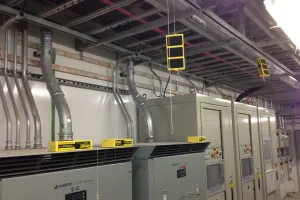
Corrosion is a silent threat that can quickly damage sensitive electronics in industrial environments. Effective control room corrosion control is essential because corrosion can cause circuitry failures, reduce equipment reliability, and lead to costly production downtime.
Industrial control rooms often house critical automation systems, communication networks, and monitoring equipment. When corrosive contaminants enter these environments, they can rapidly degrade electronic components.
In this guide, we explore the causes of electronic corrosion in industrial facilities and practical strategies for improving control rooms corrosion control, including the use of ZERUST® corrosion protection technologies, such as ZERUST® ActivDri™ Packets, Vapor Capsules, and Axxanol™ 718-ESS electrical corrosion inhibitor spray.
Protect Control Room Electronics From Corrosion
Explore proven solutions for electronic rust prevention in control rooms, cabinets, and other enclosed environments.
These facilities frequently produce sulfur-containing gases such as:
Hydrogen sulfide
Sulfur dioxide
Mercaptans
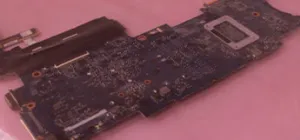
These gases react with exposed metal surfaces on circuit boards and electronic contacts. Even at low concentrations, they can initiate corrosion that disrupts electrical performance.
Regulatory changes have also increased corrosion risks. The European Union’s Restriction of Hazardous Substances (RoHS) Directive introduced new materials for electronics manufacturing. While beneficial for environmental compliance, some of these materials are more susceptible to gaseous corrosion.
As a result, corrosion failures can now occur faster and in environments that were previously considered acceptable.
Types of Electronic Corrosion That Impact Control Rooms
Understanding corrosion mechanisms helps engineers implement better control rooms corrosion control strategies.
Two common forms of electronic corrosion include:
Whisker Growth
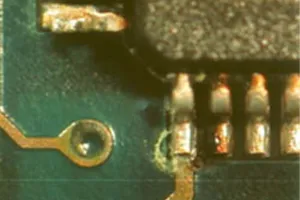
Metal whiskers are thin conductive filaments that grow from metal surfaces such as tin or silver. These whiskers can bridge electrical connections and create unintended current paths that cause system malfunctions.
Silver whisker growth on circuit boards often indicates sulfur contamination in the surrounding air.
Creep Corrosion
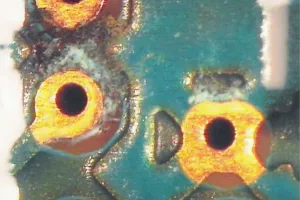
Creep corrosion occurs when corrosion products grow across circuit board surfaces and conductive traces. This corrosion spreads gradually across the board and can interfere with electrical signals.
Over time, creep corrosion can cause complete system failure if left unaddressed.
For example, silver whisker growth on circuit boards is a clear indicator of sulfur contamination. It forms unintended circuit paths and serves as a warning sign for manufacturers.
Environmental Conditions That Affect Control Rooms Corrosion Control
Modern control systems use smaller and denser electronic components that generate more heat. To prevent overheating, control rooms require increased airflow.
While airflow helps cool equipment, it also introduces airborne contaminants into electronic enclosures.
For this reason, industrial facilities often classify control room environments using the ISA G1 environmental classification system. Maintaining an ISA G1 Mild environment helps ensure reliable performance of sensitive electronics.
Most equipment manufacturers recommend maintaining:
Copper corrosion rates below 300 Angstroms per month
Silver corrosion rates below 200 Angstroms per month
Meeting these thresholds typically requires a combination of:
Chemical filtration systems
Particulate filtration
Environmental monitoring
These measures form the foundation of a strong control rooms corrosion control program.
Particulate Contamination and Its Role in Electronic Corrosion
Dust and airborne particles also contribute to corrosion failures in control rooms. Contaminants typically affect electronics in three ways.
Mechanical Effects
Dust can block cooling airflow, interfere with moving components, and accumulate on sensitive surfaces.
Chemical Effects
Dust may contain sulfur compounds, chlorides, or other corrosive salts that react with electronic metals.
Electrical Effects
Fine conductive dust can alter electrical impedance or create unintended conductive paths between circuit traces.
When moisture is present, dust particles become even more corrosive. Moisture allows ions to migrate across circuit boards, accelerating corrosion damage.
Effective filtration helps reduce these risks. Recommended filtration levels include:
MERV 8 filtration for recirculated air within computer rooms
MERV 11 or MERV 13 filtration for outside air entering the control room
ZERUST® Solutions for Control Rooms Corrosion Control
In addition to environmental filtration, corrosion protection technologies can provide localized protection for sensitive electronics.
ZERUST® offers several products designed to improve control rooms corrosion control inside cabinets, panels, and other electronic enclosures.
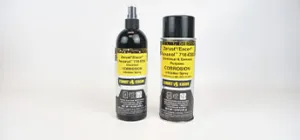
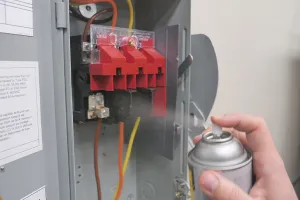
Axxanol™ 718-ESS is an electrical corrosion inhibitor designed for environments that contain acid gases and humidity.
The spray forms a thin, non-staining protective film on metal surfaces while maintaining electrical conductivity.
Typical applications include:
Electrical cabinets
Junction boxes
Electronic connectors
Machinery components
Hinges and moving parts
Axxanol™ 718-ESS conforms to key aspects of MIL-PRF-81309H and contains no CFCs or 1,1,1-Trichloroethane. This makes it suitable for use in a wide range of industrial environments where corrosion protection is needed without interfering with electronic performance.
ZERUST® Vapor Capsules
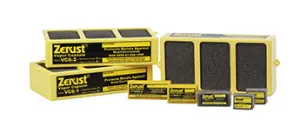
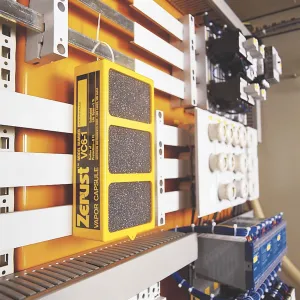
Vapor Capsules release corrosion-inhibiting vapors into enclosed spaces.
These capsules protect metal surfaces inside:
Electrical cabinets
Control panels
Junction boxes
Instrument enclosures
Once installed inside a sealed enclosure, the vapor molecules disperse throughout the space and form a protective molecular layer on exposed metal surfaces.
Installation is quick and simple. Remove the protective backing and attach the capsule using the integrated adhesive strip.
Depending on the model and environmental conditions, Vapor Capsules can provide protection for one‡ to two years‡.
Explore ZERUST® Corrosion Protection Products
Discover ZERUST® solutions designed to protect electronics, control panels, and metal components from corrosion in demanding industrial environments.
Benefits of ZERUST® Control Rooms Corrosion Control Solutions
ZERUST® technologies provide several advantages for protecting electronics and electrical equipment in industrial environments.
Reliable Protection ZERUST® corrosion inhibitors protect sensitive electronics from moisture, airborne contaminants, and corrosive gases.
Easy Implementation Products such as ActivDri™ packets and Vapor Capsules install quickly inside existing enclosures without major equipment modifications.
Safe and Proven Technology ZERUST® corrosion inhibitors meet industry standards and are widely used across heavy industrial applications.
Customizable Solutions ZERUST® corrosion specialists can help develop tailored corrosion protection programs for specific facilities and environments.
See How ZERUST® VCI Capsules Protect Equipment in Harsh Environments
Learn how ZERUST® VCI capsules and bags helped protect sensitive marine equipment from corrosion in challenging offshore conditions.
Improving Control Rooms Corrosion Control in Industrial Facilities
Maintaining reliable control systems requires proactive corrosion management. Airborne contaminants, humidity, and dust can quickly damage electronic components if left unmanaged.
A comprehensive control rooms corrosion control strategy may include:
Environmental monitoring and filtration
Moisture control technologies
Vapor corrosion inhibitors for enclosed electronics
Preventative maintenance and inspection
ZERUST® corrosion protection solutions help protect critical electronics, extend equipment life, and reduce costly downtime in industrial facilities.
If you are experiencing corrosion issues in control rooms or electronic cabinets, working with corrosion specialists can help identify the root cause and implement an effective protection strategy.
Need Help Improving Control Rooms Corrosion Control?
ZERUST® corrosion specialists can help identify corrosion risks in control rooms, electrical cabinets, and industrial electronics. Contact our team to discuss your environment and find the right protection solution.
Tom White is the Marketing Manager at ZERUST®, bringing nearly a decade of experience in Vapor Corrosion Inhibitor (VCI) technologies and corrosion prevention solutions. He holds a degree in marketing from St. Cloud State University and specializes in translating complex technical solutions into clear, effective messaging that resonates with industrial audiences.
In his role, Tom leads strategic marketing initiatives that promote ZERUST®’s global product portfolio, including sustainable VCI packaging films, rust preventative coatings, and industrial cleaning solutions. He works closely with technical teams, sales leaders, and international partners to ensure that product positioning aligns with real-world applications and customer needs across industries such as manufacturing, transportation, and infrastructure.
Tom is actively involved in product launches, trade show planning, digital marketing strategy, and content development. His work focuses on connecting ZERUST®’s corrosion prevention technologies with engineers, manufacturers, and decision-makers who rely on effective asset protection and operational reliability.
With a strong emphasis on customer engagement and market insight, Tom helps bridge the gap between technical expertise and business impact. He supports initiatives that highlight how corrosion prevention improves equipment lifespan, reduces downtime, and contributes to more sustainable operations.
Through his contributions to the ZERUST® blog, Tom shares insights on corrosion prevention strategies, industry trends, and product applications. His content is designed to educate and inform while helping organizations identify the right solutions to protect valuable metal assets and optimize long-term performance.
Discover Proven Corrosion Prevention Solutions
Explore ZERUST® technologies designed to protect your metal assets, improve reliability, and support long-term performance.
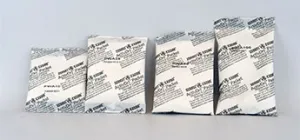
ActivDri™ PWA Packets are patent-pending, economical, effective, and easy-to-use dual-action, moisture control Vapor Corrosion Inhibitor (VCI) packets that protect against environmental contaminants and humidity that aggressively corrode metal parts, components, electronics, and electrical components/equipment
Axxanol™ 718-ESS is an electrical corrosion inhibitor spray that leaves a thin, water-displacing, non-staining, non-hardening, soft film, providing protection against challenging environments where acid gas vapors and humidity are present.
Vapor Capsules are portable VCI emitter diffusers containing proven ZERUST® Vapor Corrosion Inhibitors (VCI). They protect metals in hard-to-reach areas of control panels, electrical cabinets, or other enclosed spaces from corrosion, even when they are in operation. Additionally, use these VCI emitter diffusers as a supplement to other ZERUST® VCI packaging products for added protection.
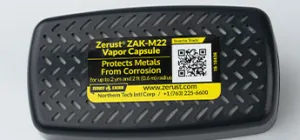
ZAK-M22 Vapor Capsules are portable VCI capsules containing proven ZERUST® VCI technology, used to protect metals in hard-to-reach areas of control panels, electrical cabinets, or any other enclosed spaces from corrosion. Each capsule has a QR code printed on the label to facilitate scheduling its replacement schedule.
ICT® Plastabs® are thin, light, rigid polyethylene VCI emitter plastic tabs that are made with ZERUST® Vapor Corrosion Inhibiting (VCI) technology. Their small, thin shape makes Plastabs® perfect for protecting critical surfaces within narrow or hard-to-reach areas of electronics or parts of equipment or as a supplement to other ZERUST® VCI packaging products for added protection.
ActivTab™(LS) are small, compressed flash corrosion VCI tablets that provide superior corrosion protection for freshly worked metal surfaces and metal items in small or hard-to-reach areas of enclosures, such as electronic cabinets, inside of pipes, or internal areas of large containers.
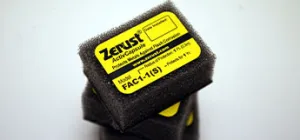
ActivCapsule™ FAC1-1(S) is a drop-in capsule containing proven ZERUST® Vapor Corrosion Inhibitor (VCI) technology used as a flash-corrosion prevention product to protect metals from corrosion in hard-to-reach areas in almost any enclosure or as a supplement to other ZERUST® VCI packaging products for added protection.
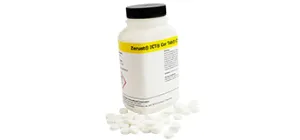
Cor Tab® are compressed drop-in VCI tablets that provide superior corrosion protection for metal surfaces and metal items in small or hard-to-reach areas of enclosures, such as electronic instruments, computer parts, small metal parts, inside tool chests, and more.
ICT®520-CB1 Anti-Tarnish Film protects silver, copper, bronze, brass, and tin from unsightly and damaging oxidation and tarnish, by blocking corrosion-causing acid gases before they reach and damage sensitive metal surfaces in shipping, storage, and work-in-progress.
ICT®510-ATS Anti-Static VCI Film provides cost-effective and versatile protection for electronics and electrical components against electrostatic discharge and corrosion damage in shipping, storage, and work-in-progress.
ICT®510-C VCI Multimetal Film provides cost-effective and versatile protection against rust and corrosion damage for ferrous and non-ferrous metals in shipping, storage, and work-in-progress.
To provide the best experiences, we use technologies like cookies to store and/or access device information. Consenting to these technologies will allow us to process data such as browsing behavior or unique IDs on this site. Not consenting or withdrawing consent, may adversely affect certain features and functions.
Functional
Always active
The technical storage or access is strictly necessary for the legitimate purpose of enabling the use of a specific service explicitly requested by the subscriber or user, or for the sole purpose of carrying out the transmission of a communication over an electronic communications network.
Preferences
The technical storage or access is necessary for the legitimate purpose of storing preferences that are not requested by the subscriber or user.
Statistics
The technical storage or access that is used exclusively for statistical purposes.The technical storage or access that is used exclusively for anonymous statistical purposes. Without a subpoena, voluntary compliance on the part of your Internet Service Provider, or additional records from a third party, information stored or retrieved for this purpose alone cannot usually be used to identify you.
Marketing
The technical storage or access is required to create user profiles to send advertising, or to track the user on a website or across several websites for similar marketing purposes.
To provide the best experiences, we use technologies like cookies to store and/or access device information. Consenting to these technologies will allow us to process data such as browsing behavior or unique IDs on this site. Not consenting or withdrawing consent, may adversely affect certain features and functions.
Functional
Always active
The technical storage or access is strictly necessary for the legitimate purpose of enabling the use of a specific service explicitly requested by the subscriber or user, or for the sole purpose of carrying out the transmission of a communication over an electronic communications network.
Preferences
The technical storage or access is necessary for the legitimate purpose of storing preferences that are not requested by the subscriber or user.
Statistics
The technical storage or access that is used exclusively for statistical purposes.The technical storage or access that is used exclusively for anonymous statistical purposes. Without a subpoena, voluntary compliance on the part of your Internet Service Provider, or additional records from a third party, information stored or retrieved for this purpose alone cannot usually be used to identify you.
Marketing
The technical storage or access is required to create user profiles to send advertising, or to track the user on a website or across several websites for similar marketing purposes.

 Corrosion is a silent threat that can quickly damage sensitive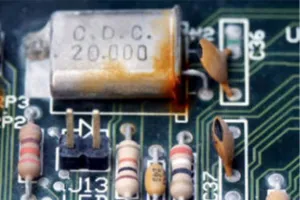
 ActivDri™ Packets combine moisture control with
  Axxanol™ 718-ESS is an electrical corrosion inhibitor designed for environments that contain acid gases and humidity.
 Vapor Capsules release corrosion-inhibiting vapors into enclosed spaces.