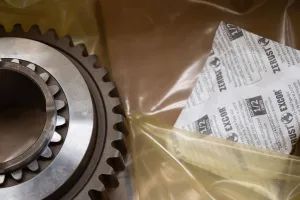
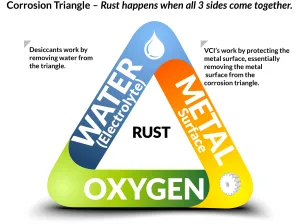
Because these two technologies perform different functions, desiccants and VCI do not interfere with each other. VCI will not stop desiccants from absorbing moisture, and desiccants will not prevent VCI chemistry from protecting the metal surface.
However, using desiccants with VCI packaging requires proper handling and placement. If used incorrectly, desiccants can actually increase the risk of corrosion inside a package.
Desiccants and VCI: Know When to Use Each
Compare how desiccants reduce moisture and how VCI protects metal surfaces, so you can choose the right approach for your packaging and shipping conditions.
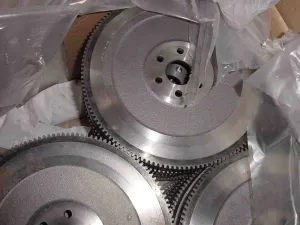
When used properly, desiccants VCI packaging systems provide complementary corrosion protection.
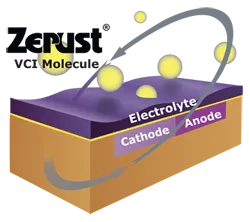
VCI technology protects metal surfaces by forming an invisible molecular layer that slows the corrosion process.
Desiccants remove moisture from the air inside the package, reducing humidity that can accelerate corrosion reactions.
By combining these approaches, manufacturers can protect metal parts during long-term storage, export shipping, or exposure to humid environments.
The key is handling desiccants correctly and placing them in the proper location inside the package.
Proper Storage and Handling of Desiccants
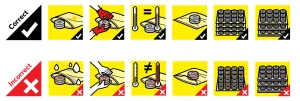
One of the most common mistakes when using desiccants with VCI packaging occurs before operators even place the desiccant inside the container.
In many facilities, boxes, pails, or drums of desiccants sit open at packaging workstations. When this happens, the desiccant immediately begins absorbing moisture from the surrounding air.
Workers may place a desiccant that has already partially saturated with moisture inside the shipping container.
High humidity levels in the facility can significantly reduce the effectiveness and lifespan of the desiccant before workers even use it.
The solution is simple.
Always keep desiccant containers closed and sealed when not in use to prevent premature moisture absorption.
Avoid Direct Contact Between Desiccants and Metal
Another critical factor when using desiccants VCI packaging systems is the placement of the desiccant inside the container.
Never place desiccants in direct contact with bare metal parts.
As desiccants absorb moisture, they draw humidity toward themselves. If a desiccant touches metal, the moisture concentration at that point increases and may accelerate corrosion at the contact location.
Instead, desiccants should be positioned so they can absorb moisture from the surrounding air without touching the metal components.
A Proven Packaging Method Using Desiccants and VCI
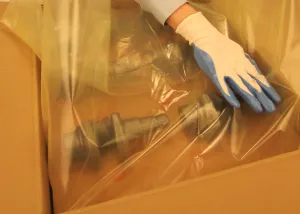
For export shipments and overseas transportation, an effective packaging design combines VCI protection with desiccants in a layered packaging system.
A common method uses two liner bags inside the shipping container.
The inner liner bag contains the metal parts and is made from VCI film.
The outer liner bag is typically standard polyethylene film.
Desiccants are placed between the two liners.
This configuration allows the desiccants to reduce humidity inside the container while the VCI packaging protects the metal surfaces directly.
The desiccants control moisture levels while the VCI chemistry forms a protective barrier on the metal.
Together, they create a reliable corrosion prevention system for long shipping routes, ocean transport, and high-humidity environments.
Protect Metal Parts with ZERUST® VCI Packaging Films
Explore ZERUST® VCI packaging films designed to protect metal parts from corrosion during storage and shipping, including export and overseas transport.
ZERUST®/EXCOR® offers a full line of corrosion prevention solutions, including VCI packaging, corrosion inhibitors, and expert corrosion management support.
ZERUST® invented VCI poly technology and provides corrosion prevention solutions in more than 70 countries worldwide.
For over 50 years, ZERUST® has helped companies reduce corrosion damage during manufacturing, storage, and global shipping.
If you are designing packaging systems that combine desiccants and VCI protection, ZERUST® corrosion specialists can help evaluate your process and recommend the most effective solution.
Need Help Designing a Desiccants and VCI Packaging System?
ZERUST® corrosion specialists can help evaluate your packaging process and recommend the best combination of VCI technology and moisture control for storage, export shipping, and long-term protection.
Jennifer Humes served as Sales Director at ZERUST® for more than 20 years, specializing in corrosion prevention solutions for manufacturers across the southeastern United States. Now retired, Jennifer leaves behind a legacy of helping organizations implement effective, long-term corrosion protection strategies tailored to their specific operational needs.
Throughout her career, Jennifer worked closely with manufacturers, engineers, and supply chain teams to develop and implement corrosion management programs that protected valuable metal assets during production, storage, and shipment. Her expertise included recommending ZERUST® Vapor Corrosion Inhibitor (VCI) packaging, rust preventative coatings, and integrated corrosion control solutions designed to improve reliability and reduce costly damage.
Jennifer’s strength was her ability to build lasting customer relationships while delivering practical, results-driven solutions. She understood the unique challenges faced by manufacturers in industries such as automotive, metalworking, and industrial equipment, and she helped organizations optimize their corrosion prevention processes to improve efficiency, extend equipment lifespan, and minimize downtime.
In addition to her commercial leadership, Jennifer played an important role in guiding customers through the implementation of ZERUST® technologies, ensuring that solutions were both technically effective and easy to integrate into existing operations.
Jennifer’s contributions to the ZERUST® blog reflect her deep industry experience and customer-focused approach. Her insights continue to support manufacturers in making informed decisions about corrosion prevention, reinforcing ZERUST®’s reputation as a trusted partner in protecting metal assets worldwide.
Protect Your Operations with Proven Corrosion Solutions
Explore ZERUST® corrosion prevention technologies designed to reduce risk, improve reliability, and support long-term performance.
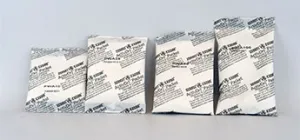
ZDC Desiccant Series features montmorillonite clay packaged in Tyvek material that offers an excellent barrier to water in liquid form while also allowing water vapors to pass through. This minimizes the risk of the desiccants causing corrosion that may come in direct contact with metals when compared to other desiccants made with different materials.
ActivDri™ PWA Packets are patent-pending, economical, effective, and easy-to-use dual-action, moisture control Vapor Corrosion Inhibitor (VCI) packets that protect against environmental contaminants and humidity that aggressively corrode metal parts, components, electronics, and electrical components/equipment
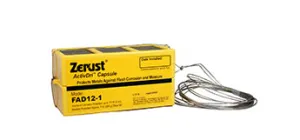
ActivDri™ FAD12-1 Desiccant VCI Capsule protects metals in hard-to-reach areas of enclosed spaces by utilizing Vapor Corrosion Inhibitors (VCIs) to prevent corrosion and a silica-gel desiccant to combat humidity that affects metals and electronics in corrosive environments such as salty air or power plants.
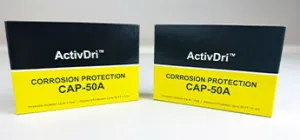
ActivDri™ CAP-50A is a dual-action moisture control capsule designed for enclosed industrial and electrical applications. It incorporates ZERUST® Intelligent Counter-Corrosion Technologies (ICT®) that offer slow and fast-releasing Vapor Corrosion Inhibitors (VCI) that settle on exposed metal surfaces to protect them against environmental contaminants and humidity that aggressively corrode metals during operation, shipping, and storage.
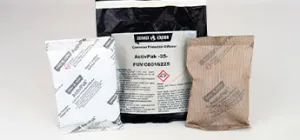
ActivPak® is a versatile and powerful fast-acting VCI sachet designed to address flash rust and corrosion concerns in demanding scenarios, including overseas shipping and polluted factory environments.
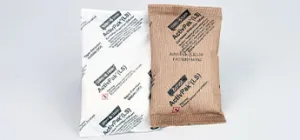
ActivPak®(LS) Flash Corrosion VCI Emitters offer fast-acting corrosion protection in challenging conditions, such as factories, marine environments, waste treatment facilities, and power plants.
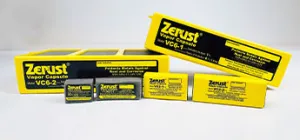
Vapor Capsules are portable VCI emitter diffusers containing proven ZERUST® Vapor Corrosion Inhibitors (VCI). They protect metals in hard-to-reach areas of control panels, electrical cabinets, or other enclosed spaces from corrosion, even when they are in operation. Additionally, use these VCI emitter diffusers as a supplement to other ZERUST® VCI packaging products for added protection.
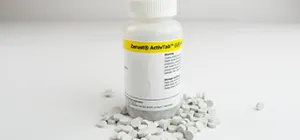
ActivTab™(LS) are small, compressed flash corrosion VCI tablets that provide superior corrosion protection for freshly worked metal surfaces and metal items in small or hard-to-reach areas of enclosures, such as electronic cabinets, inside of pipes, or internal areas of large containers.
ActivPowder™(LS)-10F is a Vapor Corrosion Inhibitor (VCI) powder designed to protect ferrous metal surfaces in large voids from corrosion. It combines VCI with a Flash Corrosion Inhibitor (FCI™) to prevent flash rust and provide long-term corrosion protection.
ActivPowder™-10F is a powerful Vapor Corrosion Inhibitor (VCI) powder designed to protect ferrous metal surfaces in large voids from corrosion. It combines VCI with a Flash Corrosion Inhibitor (FCI™) to prevent flash rust and provide long-term corrosion protection.


 When used properly, desiccants VCI packaging systems provide complementary corrosion protection.
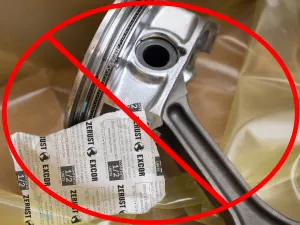 Another critical factor when using desiccants VCI packaging systems is the placement of the desiccant inside the container.