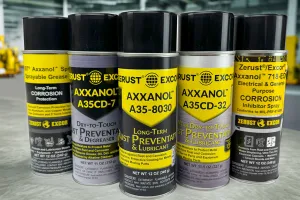
In manufacturing, companies invest significant time and resources into protecting metal assets from corrosion during storage and transportation. However, even well-designed protection programs can sometimes fail. When this happens, many teams begin asking the same question: What to do when rust prevention fails? Many operations rely on volatile corrosion inhibitor (VCI) packaging, rust preventative coatings, desiccants, or a combination of these methods, yet corrosion can still occur if underlying process issues are present.
When corrosion appears, many companies immediately assume the rust prevention product itself is responsible. As a result, they begin searching for a different brand or type of rust preventative product in hopes that the new solution will fix the problem.
However, the more effective approach is to investigate the root cause of the corrosion issue before changing products.
Start With Root Cause Analysis When Rust Prevention Fails
When rust prevention fails, the first step should always be investigation. Understanding the factors that caused corrosion to develop allows manufacturers to implement a solution that actually addresses the problem.
Many companies are surprised to learn that the corrosion was not caused by the VCI packaging or rust preventative coatings they used. Instead, the issue often originates somewhere else within the manufacturing or handling process.
Handling practices that introduce moisture or salts
Without identifying the root cause, simply changing corrosion inhibitors or packaging materials may only mask the problem rather than solve it.
Get Expert Help Identifying the Root Cause
ZERUST® corrosion specialists can evaluate your process, environment, and packaging to pinpoint what is driving rust so you can fix the issue with confidence.
When determining what to do when rust prevention fails, it is critical to evaluate the entire manufacturing process. When analyzing what to do when rust prevention fails, it is important to recognize that corrosion rarely occurs because of a single factor. Instead, it is often the result of several variables interacting across production, cleaning, packaging, and storage.
Manufacturers should review the full lifecycle of their metal parts, including:
For example, many manufacturing operations rely on metalworking fluids such as cutting fluids, coolants, wash detergents, and final rinse solutions. The chemistry of these fluids and the quality of the water used to mix them can significantly influence corrosion risk.
If fluid concentrations change or contaminants accumulate, parts may enter packaging already vulnerable to corrosion.
Evaluate Process Changes That Cause Rust Prevention to Fail
When deciding what to do when rust prevention fails, it is important to evaluate whether recent process changes may have contributed to the issue.
Manufacturing environments evolve over time. Suppliers may change, materials may be substituted, and production parameters may be adjusted to improve efficiency or reduce costs. Even small modifications can influence corrosion performance.
Examples include:
Switching to a different metal alloy
Changing a metalworking fluid formulation
Increasing storage time before shipment
Altering packaging design or materials
Modifying wash chemistry or rinse water quality
When these types of changes occur, the rust prevention system that previously worked may no longer provide the same level of protection.
What to Do When Rust Prevention Fails in Manufacturing
If your team is trying to determine what to do when rust prevention fails, working with corrosion specialists can help identify the true cause of the issue.
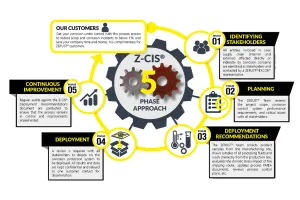
ZERUST® implements a structured root cause analysis methodology called Z-CIS® (ZERUST® Corrosion Identification System). This approach evaluates the entire corrosion system, including manufacturing conditions, material compatibility, packaging methods, and transportation environments.
ZERUST® technical specialists can assist with:
Root cause corrosion analysis
On-site or virtual corrosion audits
Laboratory testing and evaluation
Packaging design recommendations
Process adjustments that improve corrosion protection
By taking a systematic approach, manufacturers often discover that relatively small process improvements can significantly reduce corrosion risk.
Discover the Z-CIS® Corrosion Identification System
The ZERUST® Z-CIS® Approach helps manufacturers identify the true causes of corrosion by analyzing materials, processes, packaging, and environments to build a reliable rust prevention strategy.
When determining what to do when rust prevention fails, the solution is rarely as simple as switching products. Corrosion is influenced by many variables throughout the manufacturing and supply chain process.
Instead of immediately replacing corrosion inhibitors or packaging materials, manufacturers should focus on identifying the root cause of the failure and addressing the underlying issue.
Many companies that implement the Z-CIS® methodology experience significant improvements in corrosion control. In some cases, operations achieve nearly 100 percent rust-free shipments while reducing costs associated with rework, rejected parts, and customer claims.
If your organization is trying to understand what to do when rust prevention fails, ZERUST® corrosion specialists can help evaluate your processes and recommend practical solutions tailored to your manufacturing environment.
Need Help Solving a Corrosion Problem?
If you are experiencing rust issues or trying to determine the best corrosion prevention strategy, the ZERUST® team can help. Our corrosion specialists can evaluate your process, identify root causes, and recommend practical solutions tailored to your manufacturing environment.
Michael Malczewski is the Sales Director at ZERUST®, bringing more than 20 years of experience in the Vapor Corrosion Inhibitor (VCI) industry. Based in the greater Chicago area, he supports customers across the north central United States, helping manufacturers implement effective corrosion prevention programs that protect valuable metal assets and improve operational efficiency.
Throughout his career, Michael has worked closely with manufacturers, engineers, and supply chain teams to develop customized corrosion protection strategies tailored to specific applications and environments. His deep understanding of VCI technology allows him to recommend solutions that address corrosion risks during production, storage, and shipment, ensuring long-term asset reliability.
Michael has extensive experience across a wide range of industries, including automotive, metalworking, heavy equipment, and industrial manufacturing. He provides guidance on the use of ZERUST® Vapor Corrosion Inhibitor (VCI) packaging, rust preventative coatings, and integrated corrosion control systems designed to reduce damage, minimize downtime, and extend equipment lifespan.
Known for his customer-focused approach, Michael partners with organizations to evaluate corrosion challenges, optimize packaging and preservation methods, and implement practical solutions that deliver measurable results. His ability to align technical expertise with real-world application makes him a trusted advisor for companies seeking to improve corrosion prevention performance.
Through his contributions to the ZERUST® blog, Michael shares insights into corrosion management strategies, industry best practices, and product applications that help organizations strengthen their corrosion control programs and protect critical assets across their operations.
Protect Your Assets with Proven VCI Solutions
Discover ZERUST® corrosion prevention technologies designed to reduce risk, improve efficiency, and deliver reliable protection.
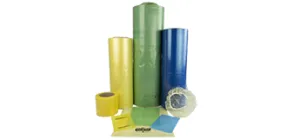
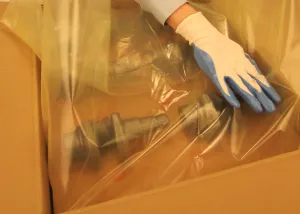
ICT®510-C VCI Film provides cost-effective and versatile protection against rust and corrosion damage for metal assets in shipping and storage. Additionally, it’s available in ferrous, non-ferrous, and multimetal formulations, as well as various-sized rolls, sheets, tubing, and bags.
ICT® VCI Poly Bags provide convenient and proven protection against corrosion damage for metals in shipping and storage. In addition, they are available in ferrous, non-ferrous, anti-tarnish, and multimetal protection types and various zipper, flat, and gusseted sizes.
ICT®510-C VCI Tubing provides versatile protection against corrosion, as the tubing offers a tailored packaging solution for parts of various sizes or long metal assets metals in shipping, storage, and work-in-progress.
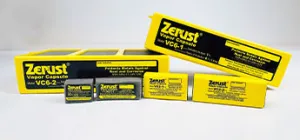
Vapor Capsules are portable VCI emitter diffusers containing proven ZERUST® Vapor Corrosion Inhibitors (VCI). They protect metals in hard-to-reach areas of control panels, electrical cabinets, or other enclosed spaces from corrosion, even when they are in operation. Additionally, use these VCI emitter diffusers as a supplement to other ZERUST® VCI packaging products for added protection.
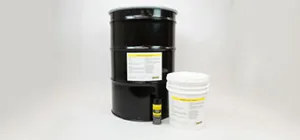
Axxanol™ Spray-G is a sprayable rust preventative grease that provides the protection of a grease in the convenience of a sprayable form. It’s designed to protect metal parts, equipment, and assemblies during long-term indoor and outdoor storage and challenging overseas shipping applications where a removable coating is essential.
The Natur-VCI® series is an internationally certified, fully biodegradable, and compostable packaging material designed to protect against corrosion damage for metals in shipping, storage, and work-in-progress.
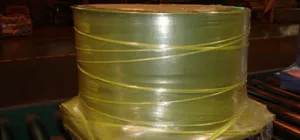
ICT®510-SM Stretch VCI Film is a high-quality cast packaging film that wraps pallet loads, bundles, large items, and irregularly shaped metal objects during storage and shipping. ideal for use with machine-stretch applications, and smaller rolls are also available for hand-stretch applications.
ICT®520-SRA Scrim VCI Film is a durable polyethylene fabric that contains woven strands for strength and tear resistance, providing cost-effective and versatile protection against corrosion damage for metals in shipping, storage, and work-in-progress.

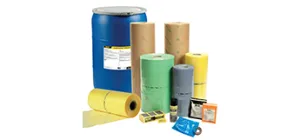 In manufacturing, companies invest significant time and resources into protecting metal assets from corrosion during storage and transportation. However, even well-designed protection programs can sometimes fail. When this happens, many teams begin asking the same question: What to do when rust prevention fails? Many operations rely on
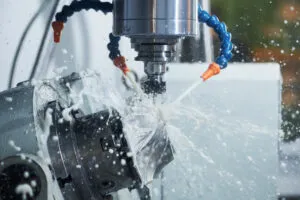 When determining what to do when rust prevention fails, it is critical to evaluate the entire manufacturing process. When analyzing what to do when rust prevention fails, it is important to recognize that corrosion rarely occurs because of a single factor. Instead, it is often the result of several variables interacting across production, cleaning, packaging, and storage.
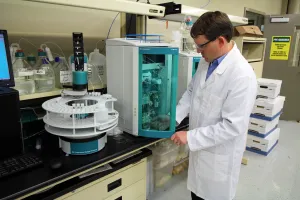 If your team is trying to determine what to do when rust prevention fails, working with corrosion specialists can help identify the true cause of the issue.