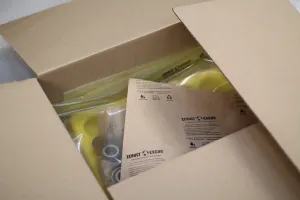
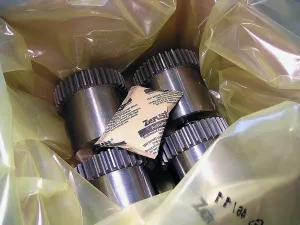
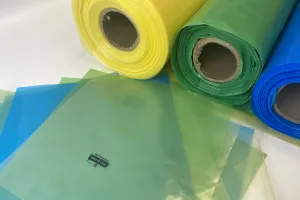
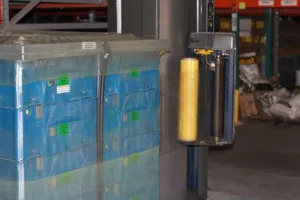
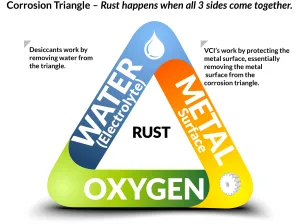
Do you currently use Vapor Corrosion Inhibitor packaging to protect metals from corrosion? Are you wondering about the best way to manage VCI storage, such as rolls of poly sheeting or VCI gusset bags, before use? Because VCI products are designed to diffuse protective chemistry into enclosed spaces, proper VCI Packaging Storage is critical. The key to preserving effectiveness is to keep materials tightly enclosed in waterproof and airtight packaging and stored under controlled environmental conditions.
Below are five manufacturer-recommended best practices for VCI storage during normal warehousing, extended downtime, and periods between use.
Why Proper VCI Storage Matters
VCI products work by releasing corrosion-inhibiting vapor molecules. If materials are exposed to excess heat, humidity, UV light, or airflow during storage, that chemistry can degrade or dissipate prematurely.
Improper VCI packaging storage can result in:
Reduced corrosion protection performance
Shortened shelf life
Film property changes
Increased corrosion risk during shipment or long-term storage
Maintaining correct storage conditions ensures your packaging performs as designed when it is finally used to protect metal components.
1. Store in a Cool, Dry Place in Original Packaging
Store VCI materials in their original packaging until ready for use.
Recommended VCI storage conditions:
Temperature range between 0°F and 85°F, or -18°C to 29°C
Relative humidity below 60 percent
Indoor storage under shelter
Away from direct sunlight
If VCI materials will not be used for an extended period, seal them in airtight plastic packaging. This protects against atmospheric contaminants and preserves the corrosion-inhibiting chemistry.
Reclose packaging at the end of each shift or during downtime to minimize vapor loss.
2. Protect from Moisture and Debris
Proper VCI Packaging Storage requires protection from environmental contamination.
Store materials:
Under shelter
Covered with sheeting to prevent dust and dirt exposure
Off wet surfaces
Once removed from original packaging, actively protect VCI materials from moisture and airborne contaminants. Keeping products clean and dry helps preserve their protective performance.
3. Protect from UV Light and Excessive Heat
UV exposure and high heat can significantly affect VCI packaging materials.
UV light may cause:
Discoloration
Cracking
Material disintegration
Excessive heat may lead to:
Film blocking
Accelerated aging
Degradation
Discoloration
Loss of antistatic properties
Loss of corona treatment properties
These changes indicate material exposure that may reduce or alter film performance. Maintaining temperature within the recommended 0°F to 85°F range is essential for reliable VCI storage.
4. Practice First-In, First-Out Inventory Procedures
The shelf life and service life of VCI packaging products can vary slightly between manufacturers.
Typical VCI storage life for poly packaging is 2 to 3 years, with a subsequent service life of up to five years when properly applied.
VCI paper typically has a storage life of 1 year. It can provide protection for an additional year when used correctly.
To maintain traceability and performance:
Follow first-in, first-out inventory procedures
Keep all labels and identification with the material until fully used
Proper storage combined with correct product selection provides the best long-term corrosion protection results.
Explore the Full ZERUST® Product Line
From VCI films and papers to rust inhibitors and specialty corrosion solutions, discover the complete range of ZERUST® products designed to protect your metal components during storage and shipment.
VCI storage is not simply about warehousing packaging materials. It directly affects corrosion performance, product quality, and customer satisfaction.
If you would like to review your VCI Packaging Storage conditions, ZERUST® corrosion specialists can evaluate your facility, storage environment, and inventory practices to help ensure maximum protection performance.
Need Help Optimizing Your VCI Storage?
Proper Storage practices directly impact corrosion protection performance. Connect with a ZERUST® corrosion specialist to review your storage environment, inventory rotation, and packaging strategy to ensure maximum protection.
Vanessa Gilbert served as Marketing Manager at ZERUST® for more than a decade, where she played a key role in shaping the company’s global brand strategy and executing integrated marketing initiatives across digital platforms, trade shows, and product marketing.
During her time at ZERUST®, Vanessa led numerous product launches and marketing campaigns that supported the growth of the company’s corrosion prevention portfolio, including Vapor Corrosion Inhibitor (VCI) packaging, rust preventative coatings, and corrosion management solutions. She worked closely with sales teams, technical experts, and international partners to ensure consistent messaging and effective market positioning across diverse industries and regions.
Vanessa was instrumental in strengthening communication with distributors and customers, helping to improve engagement, brand awareness, and overall market reach. Her efforts contributed to expanding ZERUST®’s presence in key industries such as manufacturing, transportation, and industrial supply chains, where corrosion prevention plays a critical role in protecting valuable assets and maintaining operational reliability.
With a strong understanding of both technical products and customer needs, Vanessa helped bridge the gap between product innovation and market adoption. Her work focused on delivering clear, value-driven messaging that highlighted the performance, reliability, and long-term benefits of ZERUST® solutions.
Although Vanessa has since moved on from ZERUST®, her contributions left a lasting impact on the company’s marketing strategy and global growth. Her work continues to influence how ZERUST® communicates its value and supports customers in implementing effective corrosion prevention solutions.
Explore ZERUST® Corrosion Prevention Solutions
Discover proven technologies designed to protect metal assets, improve reliability, and support long-term performance.
ICT®510-C VCI Film provides cost-effective and versatile protection against rust and corrosion damage for metal assets in shipping and storage. Additionally, it’s available in ferrous, non-ferrous, and multimetal formulations, as well as various-sized rolls, sheets, tubing, and bags.
ICT® VCI Poly Bags provide convenient and proven protection against corrosion damage for metals in shipping and storage. In addition, they are available in ferrous, non-ferrous, anti-tarnish, and multimetal protection types and various zipper, flat, and gusseted sizes.
ICT®510-C VCI Sheeting provides cost-effective and versatile protection against rust and corrosion damage for metal assets in shipping and storage. Additionally, it’s available in ferrous, non-ferrous, and multimetal formulations, as well as various-sized sheeting.
ICT®510-C VCI Tubing provides versatile protection against corrosion, as the tubing offers a tailored packaging solution for parts of various sizes or long metal assets metals in shipping, storage, and work-in-progress.
ICT®420 is an acid-free, pH-neutral, and non-abrasive VCI kraft paper that merges the practicality and cost-efficiency of paper-based packaging with advanced corrosion protection. Consequently, it streamlines the preservation of metals during work-in-progress, shipping, and storage.
ICT®420-35P VCI Poly Kraft Paper is an acid-free, pH-neutral, and non-abrasive kraft paper coated with a one-mil thick ZERUST® ICT® polyethylene layer containing Vapor Corrosion Inhibitors (VCIs). As a result, providing the kraft paper with increased tear and moisture resistance, making it an efficient and cost-effective solution for the corrosion protection of ferrous metals during work-in-progress, shipping, and storage.
ICT®427 is an acid-free, pH-neutral, and non-abrasive premium VCI paper formulated to provide robust corrosion protection for demanding situations—such as high humidity and challenging metal parts during work-in-progress, shipping, and storage.
ICT®430-35SR VCI Scrim Paper is an acid-free, pH-neutral, and non-abrasive VCI kraft paper that’s scrim-reinforced (3/4 mil polyethylene layer and fiberglass scrim). As a result, providing effective corrosion protection with the convenience and affordability of a paper wrapping product with superior strength that avoids ripping and tearing during work-in-progress, shipping, and storage.
ICT®432-35P is an acid-free, pH-neutral, and non-abrasive VCI kraft paper coated with a 3/4 mil plain polyethylene layer. As a result, providing the kraft paper with increased tear and moisture resistance, making it an efficient and cost-effective solution for the corrosion protection of multiple metal types during work-in-progress, shipping, and storage.
To provide the best experiences, we use technologies like cookies to store and/or access device information. Consenting to these technologies will allow us to process data such as browsing behavior or unique IDs on this site. Not consenting or withdrawing consent, may adversely affect certain features and functions.
Functional
Always active
The technical storage or access is strictly necessary for the legitimate purpose of enabling the use of a specific service explicitly requested by the subscriber or user, or for the sole purpose of carrying out the transmission of a communication over an electronic communications network.
Preferences
The technical storage or access is necessary for the legitimate purpose of storing preferences that are not requested by the subscriber or user.
Statistics
The technical storage or access that is used exclusively for statistical purposes.The technical storage or access that is used exclusively for anonymous statistical purposes. Without a subpoena, voluntary compliance on the part of your Internet Service Provider, or additional records from a third party, information stored or retrieved for this purpose alone cannot usually be used to identify you.
Marketing
The technical storage or access is required to create user profiles to send advertising, or to track the user on a website or across several websites for similar marketing purposes.
To provide the best experiences, we use technologies like cookies to store and/or access device information. Consenting to these technologies will allow us to process data such as browsing behavior or unique IDs on this site. Not consenting or withdrawing consent, may adversely affect certain features and functions.
Functional
Always active
The technical storage or access is strictly necessary for the legitimate purpose of enabling the use of a specific service explicitly requested by the subscriber or user, or for the sole purpose of carrying out the transmission of a communication over an electronic communications network.
Preferences
The technical storage or access is necessary for the legitimate purpose of storing preferences that are not requested by the subscriber or user.
Statistics
The technical storage or access that is used exclusively for statistical purposes.The technical storage or access that is used exclusively for anonymous statistical purposes. Without a subpoena, voluntary compliance on the part of your Internet Service Provider, or additional records from a third party, information stored or retrieved for this purpose alone cannot usually be used to identify you.
Marketing
The technical storage or access is required to create user profiles to send advertising, or to track the user on a website or across several websites for similar marketing purposes.

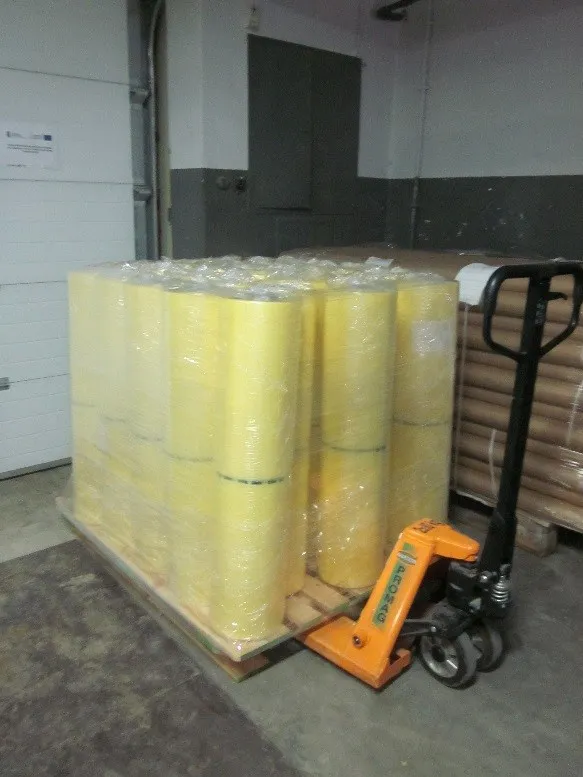 1. Store in a Cool, Dry Place in Original Packaging