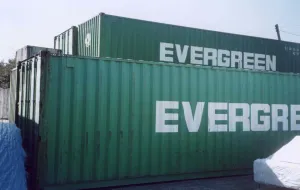
The most effective way to protect bare steel parts during sea freight is to use a system-based corrosion protection strategy. This strategy addresses moisture, salt exposure, and temperature fluctuations throughout the journey. Ocean shipping environments are extremely aggressive due to high humidity, salt-laden air, and rapid temperature swings inside containers. These conditions frequently lead to condensation, also known as container rain, which causes bare steel to rust quickly if not properly protected.
ZERUST®/EXCOR® provides an integrated corrosion control approach that combines temporary corrosion-preventive coatings, VCI packaging materials, and moisture-control technologies. When used together, these solutions help ensure bare steel parts arrive at their destination clean, dry, and corrosion-free.
Apply a corrosion preventive coating as the first layer of protection
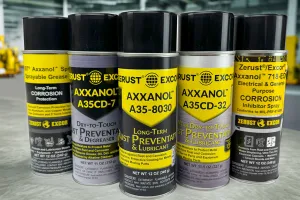
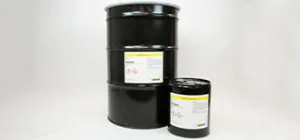
A critical first step to protect bare steel parts during sea freight is applying a temporary corrosion preventive coating. ZERUST® Axxanol™ rust preventive coatings create a protective barrier that shields steel surfaces from moisture and corrosive contaminants.
Light oil-based coatings such as Axxanol™ 33, A35-8030, and A35-30 form thin, water-repellent films. These films protect machined steel components while remaining easy to remove before assembly. For longer voyages, outdoor exposure, or extended storage, heavier grease-type coatings such as Axxanol™ Spray-G and Axxanol™ Z-Maxx provide enhanced barrier protection.
When steel parts include complex geometries, internal cavities, threads, or enclosed spaces, VCI oils such as Axxanol™ 750 and 758 offer added protection. These products combine a surface film with vapor corrosion inhibitors that migrate into hard-to-reach areas where contact coatings cannot reach.
Use VCI packaging to maintain a protective atmosphere and protect bare steel parts during sea freight
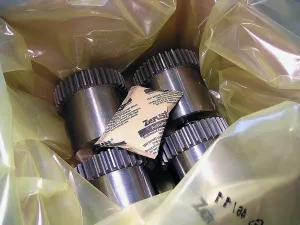
The next line of defense is VCI packaging, which helps maintain a corrosion-inhibiting environment throughout transit. Use ZERUST® VCI films, bags, and papers to fully wrap bare steel parts, minimize air exchange, and trap protective VCI vapors around the metal surfaces.
Place ZERUST® ZDC® desiccants inside the packaging to absorb residual humidity and further reduce corrosion risk. Proper sealing is essential, as it allows the VCI molecules to remain concentrated and effective for the duration of the sea journey. When combined, VCI packaging and desiccants provide robust protection against corrosion during long-distance ocean transport.
Control moisture and condensation inside shipping containers to protect bare steel parts during sea freight
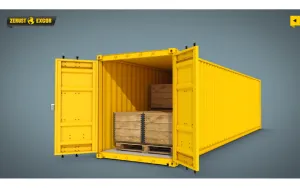
Even well-packaged parts can corrode when moisture inside the shipping container remains uncontrolled. Temperature changes during sea freight often cause condensation to form on container walls and ceilings, creating container rain that drips onto cargo.
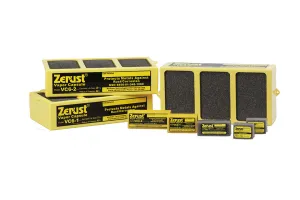
To mitigate this risk, ZERUST® ZDC® desiccants or ActivDri™ PWA moisture-control packets can be installed inside containers to absorb excess humidity. For enclosed spaces, crates, or electrical compartments, ZERUST® VCI emitters such as ActivPak® or Z-PAK® provide additional vapor-phase corrosion protection. Containers should always be loaded under dry conditions, with no standing water present before sealing.
Add Active Moisture Control with ActivDri™ PWA Packets
For added protection against condensation and container rain during ocean transit, ZERUST® ActivDri™ PWA moisture-control packets absorb excess humidity. They also provide vapor-phase corrosion protection inside shipping containers.
Example application for shipping bare steel by sea
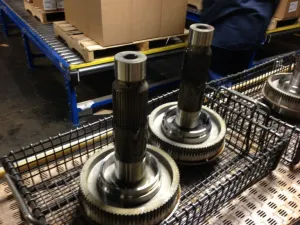
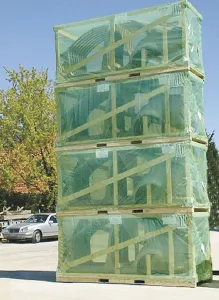
For a typical shipment of machined bare steel components transported by sea for four to six weeks, ZERUST® recommends thoroughly cleaning and drying all parts to remove machining fluids and residues. A light coat of Axxanol™ rust preventative oil should then be applied. Each component can be wrapped in ZERUST® ICT® VCI paper or sealed in a VCI bag, packed into a wooden crate lined with ZERUST® VCI film, and supplemented with ZDC® desiccant packs before final closure.
A proven system to protect bare steel parts during sea freight
By combining Axxanol™ corrosion preventive coatings, ICT® VCI packaging, and moisture-control technologies, ZERUST® delivers a proven, system-based solution to protect bare steel parts during sea freight. This approach, supported by the ZERUST® Z-CIS® (Corrosion Inhibiting System) methodology, helps manufacturers reduce rust claims, avoid costly rework, and prevent shipping delays. For application-specific guidance, manufacturers can contact ZERUST®/EXCOR® to speak with a technical service representative.
Get Application-Specific Guidance from ZERUST®
Every shipment presents unique corrosion risks. ZERUST® technical service experts help you design a system-based solution to protect bare steel parts during sea freight based on transit time, packaging method, and environmental exposure.



Axxanol™ 33 is a rust preventative oil that forms a light oily film, providing powerful corrosion protection against aggressive environments such as salt air and humidity.
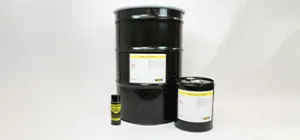
Axxanol™ A35-8030 is a long-term rust preventative oil that forms a light, thin, oily film. As a result, it provides powerful corrosion protection against aggressive environments, such as salt air and humidity. In addition to corrosion protection, it provides lubricating properties that help reduce friction and support smooth assembly and disassembly of metal parts.
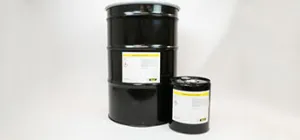
Axxanol™ A35-30 is an oil-based, non-staining rust preventative that forms a light, oily, clear film with excellent water-barrier properties. As a result, it provides powerful corrosion protection against aggressive environments, such as salt air and humidity.
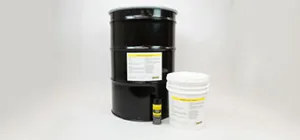
Axxanol™ Spray-G is a sprayable rust preventative grease that provides the protection of a grease in the convenience of a sprayable form. It’s designed to protect metal parts, equipment, and assemblies during long-term indoor and outdoor storage and challenging overseas shipping applications where a removable coating is essential.
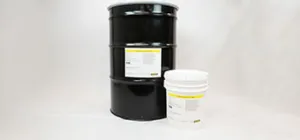
Axxanol™ Z-Maxx Anti-Corrosion Grease Series consists of two products, Axxanol™ Z-Maxx and Z-Maxx LV. Z-Maxx is a thick NLGI 2 grease and is also offered as a lower viscosity (LV) NLGI 0 grease that is designed for spreadability and light lubrication properties.
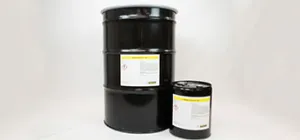
Axxanol™ 750 is a rust prevention spray containing Vapor Corrosion Inhibitors (VCI). When shipped or stored in enclosed packaging, Axxanol™ 750 forms a clear, thin, oily film that provides a moisture barrier and contact inhibitor with ZERUST® VCI chemistry that migrates to metal surfaces in hard-to-reach voids, crevices, and chambers, providing powerful corrosion protection.
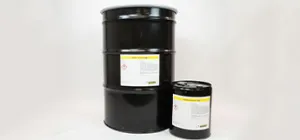
Axxanol™ 758 is a rust prevention oil containing ZERUST® Intelligent Counter-Corrosion Technologies (ICT®), which consists of high-performance non-staining contact inhibitor with dual-action slow and fast release Vapor Corrosion Inhibitors (VCI). When shipped or stored in enclosed packaging, Axxanol™ 758 VCI oil forms a clear, thin, oily film that provides a moisture barrier and contact inhibitor with ZERUST® VCI chemistry that migrates to metal surfaces in hard-to-reach voids, crevices, and chambers providing long-lasting corrosion protection.
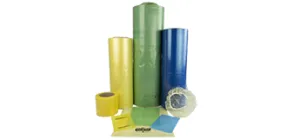
ICT®510-C VCI Film provides cost-effective and versatile protection against rust and corrosion damage for metal assets in shipping and storage. Additionally, it’s available in ferrous, non-ferrous, and multimetal formulations, as well as various-sized rolls, sheets, tubing, and bags.
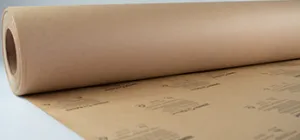
ICT®420 is an acid-free, pH-neutral, and non-abrasive VCI kraft paper that merges the practicality and cost-efficiency of paper-based packaging with advanced corrosion protection. Consequently, it streamlines the preservation of metals during work-in-progress, shipping, and storage.
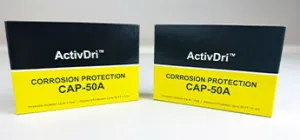
ActivDri™ CAP-50A is a dual-action moisture control capsule designed for enclosed industrial and electrical applications. It incorporates ZERUST® Intelligent Counter-Corrosion Technologies (ICT®) that offer slow and fast-releasing Vapor Corrosion Inhibitors (VCI) that settle on exposed metal surfaces to protect them against environmental contaminants and humidity that aggressively corrode metals during operation, shipping, and storage.
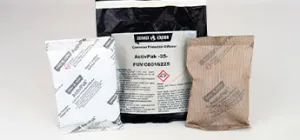
ActivPak® is a versatile and powerful fast-acting VCI sachet designed to address flash rust and corrosion concerns in demanding scenarios, including overseas shipping and polluted factory environments.
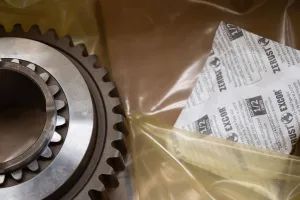
ZDC Desiccant Series features montmorillonite clay packaged in Tyvek material that offers an excellent barrier to water in liquid form while also allowing water vapors to pass through. This minimizes the risk of the desiccants causing corrosion that may come in direct contact with metals when compared to other desiccants made with different materials.
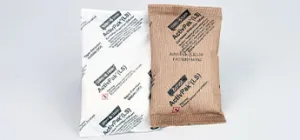
ActivPak®(LS) Flash Corrosion VCI Emitters offer fast-acting corrosion protection in challenging conditions, such as factories, marine environments, waste treatment facilities, and power plants.
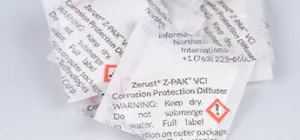
Z-PAK® is an economical, effective, and easy-to-use vapor corrosion inhibitor (VCI) diffuser packet that can be used alone or, more typically, with other ZERUST® packaging products to provide robust temporary corrosion protection for ferrous metals during shipment, storage, or work-in-progress.