Nitrates (NO₃, consisting of one nitrogen atom and three oxygen atoms) are compounds that occur naturally in soil. As a result, nitrates are also naturally present in many foods, including root vegetables such as carrots and potatoes, as well as leafy green vegetables. Nitrates are not generally harmful unless consumed in massive quantities. This natural chemistry directly explains how manufacturers safely use nitrites in VCI packaging to protect metals from corrosion.
When people consume nitrates, the digestive system converts a portion of them into nitrites through normal metabolic processes.
What are nitrites?
Nitrites consist of nitrogen-oxygen compounds with one nitrogen atom and two oxygen atoms (NO₂). Nitrite compounds can combine with other elements, such as sodium or potassium, to form sodium nitrite or potassium nitrite.
Manufacturers widely use these compounds as preservatives and color fixatives in cured meats. Nitrites are particularly effective at preventing botulism, an anaerobic bacterium that can cause paralysis and death. Regulations, therefore, require manufacturers to add small amounts of sodium nitrite to certain cured meat products. When used on their own and in moderation, nitrites are generally not harmful.
How are nitrites used in VCI packaging?
Nitrites are also highly effective corrosion inhibitors. Sodium nitrite, in particular, has long been recognized for its ability to interrupt the electrochemical reactions that cause metal corrosion.
When Northern Technologies International Corporation developed and commercialized the first VCI rust preventative plastic packaging, it formulated the active corrosion protection system using common food additives, including sodium nitrite. While sodium nitrite is an effective corrosion inhibitor, conservative chemists generally do not recognize sodium nitrite alone as a vapor corrosion inhibitor because its vapor pressure is so low that it is almost immeasurable.
However, when manufacturers combine sodium nitrite with other additives in proprietary ZERUST® formulations, the chemistry effectively becomes “VCI activated.” In this activated state, corrosion-inhibiting molecules volatilize into the enclosed air space and adsorb onto exposed metal surfaces, forming a protective molecular layer that helps prevent rust and oxidation.
Are nitrites in VCI packaging safe?
Yes. Nitrites in modern VCI packaging are safe when used as intended.
In VCI packaging systems, corrosion-inhibiting molecules release in extremely low concentrations within a sealed or semi-sealed enclosure. These molecules temporarily bond to metal surfaces to provide protection during storage or shipment. When the enclosure opens, the molecules naturally dissipate, leaving metal parts clean, dry, and ready for use.
Nitrites in VCI packaging are not present as loose chemicals or surface residues, and they do not pose an exposure risk to workers handling protected parts under normal use conditions.
Why are nitrites in VCI products sometimes misunderstood?
The historic use of a specific compound known as dicyclohexylamine nitrite, also referred to as dicyclohexylammonium nitrite, has led many people to misunderstand nitrites in VCI packaging. This compound, sometimes known by the trade name “Dichan,” was first used in VCI paper production in the 1940s.
In the 1970s, toxicologists began to recognize that compounds combining amines and nitrites could, under certain conditions, form N-nitrosamines. Researchers consider these compounds to be both carcinogenic and genotoxic. As a result of these findings, VCI products produced in most advanced industrialized nations moved away from dicyclohexylamine nitrite decades ago.
Want help understanding how modern VCI chemistry avoids historic nitrite concerns? ZERUST® can help evaluate your application and corrosion risks.
How modern ZERUST® VCI packaging differs from early nitrite-based VCIs
ZERUST® VCI packaging has never contained dicyclohexylamine nitrite. In addition, ZERUST® formulations eliminate all amines because they cause skin and respiratory irritation.
Instead, modern ZERUST® VCI packaging uses proprietary corrosion-inhibiting formulations that safely and effectively activate nitrite-based chemistry without producing harmful byproducts. Extensive laboratory testing, commercial use, and recognized standard test methods for vapor corrosion inhibitors used by U.S. and NATO military organizations have validated these formulations.
Do nitrites in VCI packaging become airborne or remain on parts?
No. Nitrites used in VCI packaging do not remain on metal parts as residues. Within an enclosed environment, corrosion-inhibiting molecules adsorb onto metal surfaces to provide protection. Once the packaging is opened, these molecules desorb and dissipate naturally.
As a result, parts protected with VCI packaging do not require cleaning, degreasing, or additional surface treatment prior to assembly, machining, or use.
Key takeaway on nitrites in VCI packaging
Nitrites in VCI packaging are not a safety risk when used in modern, properly formulated corrosion protection systems. Outdated chemistries that advanced VCI products no longer use largely drive concerns surrounding nitrites. Today’s ZERUST® VCI packaging leverages nitrite-based corrosion inhibition in a controlled, proven, and safe manner to protect metal components without exposing users or parts to harmful residues.
Have questions about nitrites in VCI packaging or selecting the right corrosion protection for your application? Speak with a ZERUST® corrosion expert.
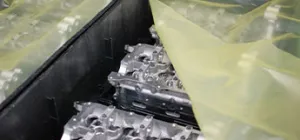
ICT®510-C Ferrous VCI Film provides cost-effective and targeted protection against rust damage for ferrous metals, such as steel, iron, and cast iron in shipping, storage, and work-in-progress.
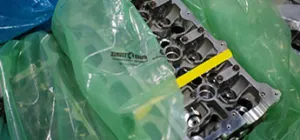
ICT®510-C VCI Multimetal Film provides cost-effective and versatile protection against rust and corrosion damage for ferrous and non-ferrous metals in shipping, storage, and work-in-progress.
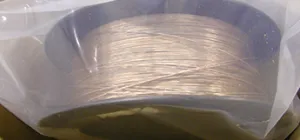
ICT®510-C Non-ferrous VCI Film provides cost-effective and versatile protection against corrosion damage for non-ferrous metals such as aluminum, copper, brass, and bronze, in shipping, storage, and work-in-progress.
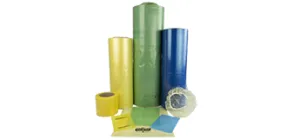
ICT®510-C VCI Film provides cost-effective and versatile protection against rust and corrosion damage for metal assets in shipping and storage. Additionally, it’s available in ferrous, non-ferrous, and multimetal formulations, as well as various-sized rolls, sheets, tubing, and bags.
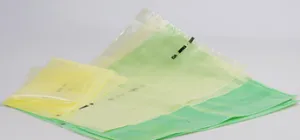
ICT® VCI Poly Bags provide convenient and proven protection against corrosion damage for metals in shipping and storage. In addition, they are available in ferrous, non-ferrous, anti-tarnish, and multimetal protection types and various zipper, flat, and gusseted sizes.
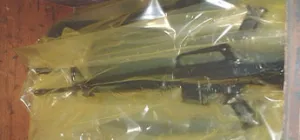
ICT®510-C VCI Weapon Bags are specifically designed to protect weapons, including handguns, rifles, as well as accessories, against corrosion, dust, sand, and humidity damage in shipping, storage, and between operations.
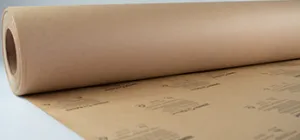
ICT®420 is an acid-free, pH-neutral, and non-abrasive VCI kraft paper that merges the practicality and cost-efficiency of paper-based packaging with advanced corrosion protection. Consequently, it streamlines the preservation of metals during work-in-progress, shipping, and storage.

ICT®420-35P VCI Poly Kraft Paper is an acid-free, pH-neutral, and non-abrasive kraft paper coated with a one-mil thick ZERUST® ICT® polyethylene layer containing Vapor Corrosion Inhibitors (VCIs). As a result, providing the kraft paper with increased tear and moisture resistance, making it an efficient and cost-effective solution for the corrosion protection of ferrous metals during work-in-progress, shipping, and storage.
ICT®432-35P is an acid-free, pH-neutral, and non-abrasive VCI kraft paper coated with a 3/4 mil plain polyethylene layer. As a result, providing the kraft paper with increased tear and moisture resistance, making it an efficient and cost-effective solution for the corrosion protection of multiple metal types during work-in-progress, shipping, and storage.
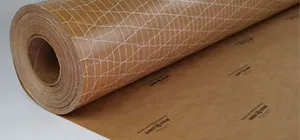
ICT®430-35SR VCI Scrim Paper is an acid-free, pH-neutral, and non-abrasive VCI kraft paper that’s scrim-reinforced (3/4 mil polyethylene layer and fiberglass scrim). As a result, providing effective corrosion protection with the convenience and affordability of a paper wrapping product with superior strength that avoids ripping and tearing during work-in-progress, shipping, and storage.
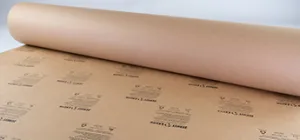
ICT®427 is an acid-free, pH-neutral, and non-abrasive premium VCI paper formulated to provide robust corrosion protection for demanding situations—such as high humidity and challenging metal parts during work-in-progress, shipping, and storage.