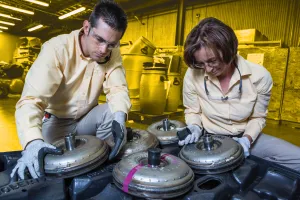
VCI technology is designed to protect metals without negatively affecting nearby non-metallic materials. When properly specified and applied, the VCI effect on non-metallic surfaces is neutral, meaning it does not interfere with the performance, integrity, or appearance of electronics, plastics, rubber, wood, or other common packaging and assembly materials.
Does VCI affect Electronics and Electrical Components?
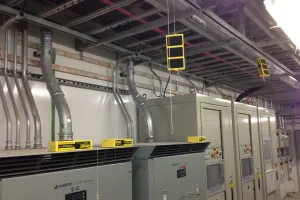
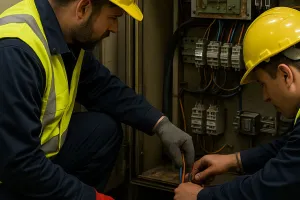
VCI does not interfere with electronic circuitry, contacts, or signal integrity. ZERUST® VCI molecules form a molecular protective layer only on metal surfaces and do not leave conductive, oily, or insulating residues behind. As a result, sensitive electronics remain clean, dry, and fully functional after storage or shipment.
This makes VCI a preferred corrosion protection method for control panels, connectors, enclosures, motors, and other electronic assemblies exposed to humidity or corrosive atmospheres. You can learn more about how ZERUST® addresses corrosion risks in electronics here: https://www.zerust.com/applications/electronic-rust-prevention/
For applications with elevated corrosion risk, ZERUST® also offers custom additive options that enhance corrosion protection for electronics operating in harsh or highly contaminated environments. These additives can be incorporated into packaging or materials to address specific challenges such as high humidity, chlorides, or multimetal assemblies. More information is available here: https://www.zerust.com/blog/vci-film-additives-and-zerust-custom-options/.
Does VCI affect Non-Metallic Surfaces such as Plastics, Rubber Materials, or Wood?
Unlike oils, greases, and liquid rust preventatives, VCI does not plasticize, swell, soften, or degrade plastics and elastomers. The VCI effect on non-metallic surfaces such as plastic housings, wire insulation, seals, and rubber components remains non-reactive. This allows manufacturers to protect metal and non-metal parts together in a single package without material compatibility concerns.
Although wood is non-metallic, it can indirectly contribute to corrosion. Wooden pallets, crates, and dunnage often absorb moisture and may release organic acids or corrosive vapors that accelerate rust on nearby metal components. In enclosed packaging environments, these emissions can significantly increase corrosion risk during storage or transport.
VCI technology helps neutralize this risk by protecting exposed metal surfaces from corrosive byproducts released by wood. ZERUST® VCI packaging creates a protective atmosphere that shields metals from moisture and corrosive compounds commonly associated with wooden packaging materials.
Wood Packaging Can Increase Corrosion Risk
Wood pallets and crates can release moisture and corrosive byproducts that accelerate rust on metal parts. Learn how ZERUST® VCI packaging eliminates this hidden corrosion risk.
Why VCI Is Safer Than Traditional Rust Preventatives
Traditional rust prevention methods, such as oils, greases, and liquid coatings, frequently interact with non-metallic materials. These products can stain wood, degrade rubber, soften plastics, attract dust, and require extensive cleaning before assembly or use. By contrast, VCI provides corrosion protection without direct contact, making it far less likely to affect surrounding non-metallic surfaces.
Application Validation is Still Recommended to Verify VCI Does Not Affect Your Non-Metallic Surface
Because every application involves a unique combination of materials, processes, and environmental conditions, ZERUST® always recommends validating compatibility for critical or complex assemblies. A ZERUST® account manager can help evaluate your specific use case and confirm the most appropriate VCI solution.
Validate Your Application with ZERUST®
Every material combination and environment is different. Speak with a ZERUST® expert to confirm
VCI compatibility and ensure reliable corrosion protection for your specific application.
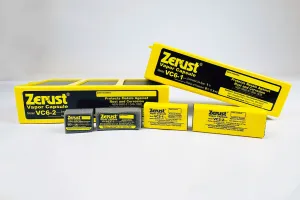
Vapor Capsules are portable VCI emitter diffusers containing proven ZERUST® Vapor Corrosion Inhibitors (VCI). They protect metals in hard-to-reach areas of control panels, electrical cabinets, or other enclosed spaces from corrosion, even when they are in operation. Additionally, use these VCI emitter diffusers as a supplement to other ZERUST® VCI packaging products for added protection.
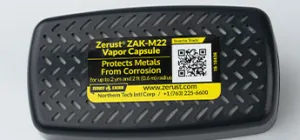
ZAK-M22 Vapor Capsules are portable VCI capsules containing proven ZERUST® VCI technology, used to protect metals in hard-to-reach areas of control panels, electrical cabinets, or any other enclosed spaces from corrosion. Each capsule has a QR code printed on the label to facilitate scheduling its replacement schedule.

ICT® Plastabs® are thin, light, rigid polyethylene VCI emitter plastic tabs that are made with ZERUST® Vapor Corrosion Inhibiting (VCI) technology. Their small, thin shape makes Plastabs® perfect for protecting critical surfaces within narrow or hard-to-reach areas of electronics or parts of equipment or as a supplement to other ZERUST® VCI packaging products for added protection.