There is no difference between volatile corrosion inhibitors and vapor corrosion inhibitors. Furthermore, the two terms describe the same corrosion protection technology and are used interchangeably throughout the corrosion prevention industry.
In practice, volatile corrosion inhibitors and vapor corrosion inhibitors (VCI) refer to chemical compounds that protect metal surfaces by releasing corrosion-inhibiting vapors into an enclosed space.
What Are Other Names for Vapor Corrosion Inhibitors?
You may encounter VCIs described by several different terms, including:
- Vapor-phase corrosion inhibitors
- Vapor inhibitors
- Vapor-transported corrosion inhibitors
- Volatile corrosion inhibitors
All of these names refer to the same corrosion protection technology.
Why Are VCIs Effective for Hard-to-Reach Areas?
One major advantage of volatile corrosion inhibitors is their ability to vaporize at normal temperatures. Because the protective molecules travel through the air, they can reach internal cavities, crevices, and recessed surfaces that traditional contact coatings may miss.
For this reason, industries such as oil and gas, transportation, defense, and heavy manufacturing widely use VCIs for long-term and complex corrosion protection.
ZERUST® provides corrosion protection expertise across a wide range of industries, from automotive and aerospace to oil and gas, defense, and heavy manufacturing.
Are Volatile Corrosion Inhibitors Safe to Use?
Modern VCI technologies are engineered to be effective while remaining safe when used as directed. The corrosion-inhibiting vapors are released at very low concentrations inside enclosed spaces and are designed to protect metal surfaces, not people or equipment.
When parts are removed from the packaging, the vapor dissipates, leaving the metal clean and ready for use.
Choosing the Right VCI Solution
Although there is no difference between volatile corrosion inhibitors and vapor corrosion inhibitors, not all VCI products perform the same. Protection effectiveness depends on factors such as:
- Metal type
- Exposure conditions
- Protection duration
- Packaging design
- Compatibility with existing processes
ZERUST®/EXCOR® is the leading provider of comprehensive corrosion management solutions. We offer a range of VCI products and services that can help protect your metal assets from corrosion. For over 50 years, ZERUST® VCI film has delivered proven, safe corrosion protection to thousands of customers worldwide.
Not sure which VCI product is right for your application? Our ZERUST®/EXCOR® specialists can help you select the most effective corrosion management solution for your metal assets.
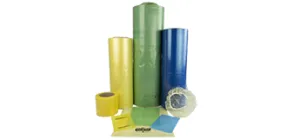
ICT®510-C VCI Film provides cost-effective and versatile protection against rust and corrosion damage for metal assets in shipping and storage. Additionally, it’s available in ferrous, non-ferrous, and multimetal formulations, as well as various-sized rolls, sheets, tubing, and bags.

ICT®420 is an acid-free, pH-neutral, and non-abrasive VCI kraft paper that merges the practicality and cost-efficiency of paper-based packaging with advanced corrosion protection. Consequently, it streamlines the preservation of metals during work-in-progress, shipping, and storage.

ICT®420-35P VCI Poly Kraft Paper is an acid-free, pH-neutral, and non-abrasive kraft paper coated with a one-mil thick ZERUST® ICT® polyethylene layer containing Vapor Corrosion Inhibitors (VCIs). As a result, providing the kraft paper with increased tear and moisture resistance, making it an efficient and cost-effective solution for the corrosion protection of ferrous metals during work-in-progress, shipping, and storage.

ICT®430-35SR VCI Scrim Paper is an acid-free, pH-neutral, and non-abrasive VCI kraft paper that’s scrim-reinforced (3/4 mil polyethylene layer and fiberglass scrim). As a result, providing effective corrosion protection with the convenience and affordability of a paper wrapping product with superior strength that avoids ripping and tearing during work-in-progress, shipping, and storage.

ICT®427 is an acid-free, pH-neutral, and non-abrasive premium VCI paper formulated to provide robust corrosion protection for demanding situations—such as high humidity and challenging metal parts during work-in-progress, shipping, and storage.
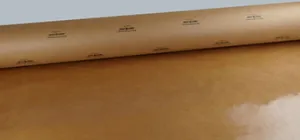
ICT®432-35P is an acid-free, pH-neutral, and non-abrasive VCI kraft paper coated with a 3/4 mil plain polyethylene layer. As a result, providing the kraft paper with increased tear and moisture resistance, making it an efficient and cost-effective solution for the corrosion protection of multiple metal types during work-in-progress, shipping, and storage.
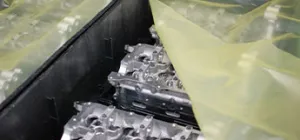
ICT®510-C Ferrous VCI Film provides cost-effective and targeted protection against rust damage for ferrous metals, such as steel, iron, and cast iron in shipping, storage, and work-in-progress.
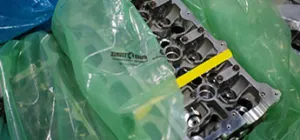
ICT®510-C VCI Multimetal Film provides cost-effective and versatile protection against rust and corrosion damage for ferrous and non-ferrous metals in shipping, storage, and work-in-progress.
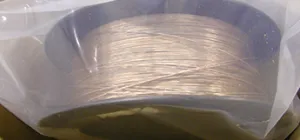
ICT®510-C Non-ferrous VCI Film provides cost-effective and versatile protection against corrosion damage for non-ferrous metals such as aluminum, copper, brass, and bronze, in shipping, storage, and work-in-progress.
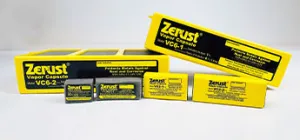
Vapor Capsules are portable VCI emitter diffusers containing proven ZERUST® Vapor Corrosion Inhibitors (VCI). They protect metals in hard-to-reach areas of control panels, electrical cabinets, or other enclosed spaces from corrosion, even when they are in operation. Additionally, use these VCI emitter diffusers as a supplement to other ZERUST® VCI packaging products for added protection.
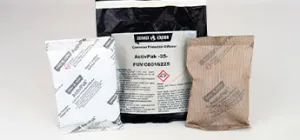
ActivPak® is a versatile and powerful fast-acting VCI sachet designed to address flash rust and corrosion concerns in demanding scenarios, including overseas shipping and polluted factory environments.
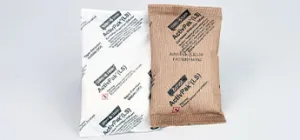
ActivPak®(LS) Flash Corrosion VCI Emitters offer fast-acting corrosion protection in challenging conditions, such as factories, marine environments, waste treatment facilities, and power plants.