When you mention the words “rust season” to someone in the metalworking industry, you may get a dry smile. Their immediate answer is typically summer, when high heat and humidity create the perfect conditions for corrosion. Unfortunately, that answer is usually quickly followed by reasons why their metals can corrode the rest of the year. Factors such as rainy seasons, factory locations near the ocean, shipping to other regions, or even extended plant shutdowns can put metals into an “open season” for corrosion.
So, is there truly a rust season, or is rust a year-round threat?
The reality is that while summer often accelerates corrosion, rust season can occur anytime environmental conditions allow moisture, oxygen, and contaminants to interact with metal surfaces.
What Causes Rust Season Conditions?
Rust season is driven by three primary factors:
Moisture or high relative humidity
Oxygen exposure
Contaminants such as salts or industrial pollutants
When these elements combine, corrosion cells form on the metal surface. During the summer months, elevated humidity and heat increase the rate of electrochemical reactions. However, the rust season does not disappear when temperatures drop.
For example:
Winter storage in unheated warehouses can lead to condensation cycles.
Spring and fall temperature swings can cause metal sweating.
Coastal environments create year round rust season due to airborne chlorides.
Overseas shipments expose parts to extreme humidity fluctuations.
Rust season is less about the calendar and more about exposure conditions.
Why Summer Is Often Considered Peak Rust Season
Summer creates ideal corrosion conditions in many regions:
High ambient humidity
Warm air that holds more moisture
Increased plant ventilation that introduces outside air
Heavy rains and storm activity
In manufacturing facilities without climate control, relative humidity can rise quickly. When metal temperatures fluctuate between day and night, condensation forms. That moisture layer becomes the starting point for corrosion.
Without proper protection, the rust season in summer can lead to:
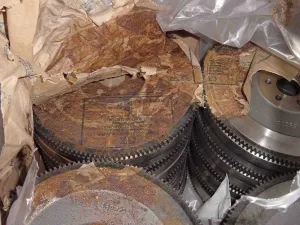
Flash rust on machined parts
Surface staining on finished components
Warranty claims from shipped assemblies
Production delays
However, focusing only on the summer can create blind spots in your corrosion strategy.
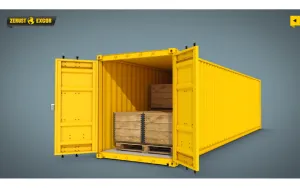
Shipping containers are especially vulnerable. As temperatures rise during the day and drop at night, internal humidity fluctuates dramatically. This cycling creates repeated condensation events inside the enclosure.
Even if parts leave the facility clean and dry, rust season can begin mid-transit.
This is why corrosion protection must extend beyond the factory floor.
Find the Right Protection for Rust Season Shipping Risks
Overseas transit, changing climates, and storage delays can trigger rust season conditions inside packaging. Explore ZERUST® application-specific solutions designed to protect metal parts through shipping and storage.
Effective rust season protection requires a combination of:
Surface preparation
Moisture control
Corrosion-inhibiting technology
Proper packaging design
1. Control Moisture at the Source
Ensure parts are clean and dry before packaging. Remove residual coolant, machining fluids, and fingerprints that can accelerate corrosion.
2. Use Vapor Corrosion Inhibitor Technology
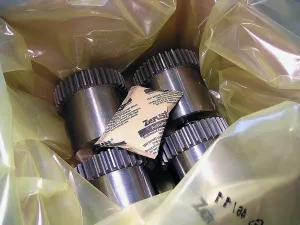
Vapor Corrosion Inhibitor technology protects metal surfaces inside enclosed packaging by releasing corrosion-inhibiting molecules that form a protective molecular layer. These molecules diffuse throughout the enclosed space and adsorb onto exposed metal surfaces, thereby interrupting the electrochemical process that causes corrosion.
These coatings provide an added barrier layer in aggressive environments.
4. Design for the Environment
Rust season protection should account for:
Duration of storage
Humidity exposure
Temperature cycling
Salt contamination risk
International shipment routes
The right packaging design depends on your specific conditions.
Design a Rust Season Strategy with the Z-CIS® Approach
Effective corrosion protection starts with evaluating real world conditions. Discover how the ZERUST® Corrosion Inhibiting System approach helps engineer packaging solutions tailored to your environment, shipping routes, and storage duration.
Then the rust season may effectively be year-round.
The key is shifting from seasonal thinking to risk-based corrosion management.
Designing Protection for Rust Season and Beyond
In today’s global marketplace, companies that produce, ship, store, and assemble metal components rarely operate in a single controlled environment. Parts may move from humid production floors to dry warehouses, from inland facilities to coastal ports, or across oceans to entirely different climate zones. As a result, metals often experience dramatic shifts in humidity and temperature during transit or storage, creating ideal conditions for rust year-round.
The good news is that rust season does not have to result in product loss, rework, or warranty claims. A wide range of corrosion protection solutions is available to safeguard metal parts during manufacturing, shipping, and long-term storage. Rust preventative coatings and oils, VCI kraft paper, and VCI film packaging provide flexible options for both short- and long-term protection in demanding environments. When properly selected and applied, these technologies help stabilize metal surfaces even when environmental conditions fluctuate.
In addition, corrosion and packaging engineers can evaluate your production facility, storage conditions, and shipping routes to determine the most effective corrosion inhibitor packaging system for your specific application. By designing protection around real-world exposure conditions, companies can reduce risk and control rust year-round.
Contact ZERUST® today to design a corrosion protection system that keeps your metal products protected year-round.
Take Control of Rust Season Today
Whether you are facing seasonal humidity, overseas shipping challenges, or year round corrosion risks, ZERUST® corrosion experts can evaluate your process and recommend a protection strategy tailored to your environment. Do not let rust season impact quality, performance, or profitability.
Vanessa Gilbert served as Marketing Manager at ZERUST® for more than a decade, where she played a key role in shaping the company’s global brand strategy and executing integrated marketing initiatives across digital platforms, trade shows, and product marketing.
During her time at ZERUST®, Vanessa led numerous product launches and marketing campaigns that supported the growth of the company’s corrosion prevention portfolio, including Vapor Corrosion Inhibitor (VCI) packaging, rust preventative coatings, and corrosion management solutions. She worked closely with sales teams, technical experts, and international partners to ensure consistent messaging and effective market positioning across diverse industries and regions.
Vanessa was instrumental in strengthening communication with distributors and customers, helping to improve engagement, brand awareness, and overall market reach. Her efforts contributed to expanding ZERUST®’s presence in key industries such as manufacturing, transportation, and industrial supply chains, where corrosion prevention plays a critical role in protecting valuable assets and maintaining operational reliability.
With a strong understanding of both technical products and customer needs, Vanessa helped bridge the gap between product innovation and market adoption. Her work focused on delivering clear, value-driven messaging that highlighted the performance, reliability, and long-term benefits of ZERUST® solutions.
Although Vanessa has since moved on from ZERUST®, her contributions left a lasting impact on the company’s marketing strategy and global growth. Her work continues to influence how ZERUST® communicates its value and supports customers in implementing effective corrosion prevention solutions.
Explore ZERUST® Corrosion Prevention Solutions
Discover proven technologies designed to protect metal assets, improve reliability, and support long-term performance.
ICT®510-C VCI Film provides cost-effective and versatile protection against rust and corrosion damage for metal assets in shipping and storage. Additionally, it’s available in ferrous, non-ferrous, and multimetal formulations, as well as various-sized rolls, sheets, tubing, and bags.
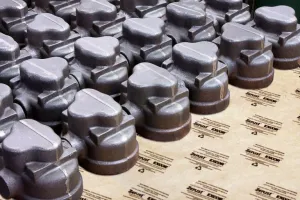
ICT®420 is an acid-free, pH-neutral, and non-abrasive VCI kraft paper that merges the practicality and cost-efficiency of paper-based packaging with advanced corrosion protection. Consequently, it streamlines the preservation of metals during work-in-progress, shipping, and storage.
ICT® VCI Poly Bags provide convenient and proven protection against corrosion damage for metals in shipping and storage. In addition, they are available in ferrous, non-ferrous, anti-tarnish, and multimetal protection types and various zipper, flat, and gusseted sizes.
ICT®510-C VCI Sheeting provides cost-effective and versatile protection against rust and corrosion damage for metal assets in shipping and storage. Additionally, it’s available in ferrous, non-ferrous, and multimetal formulations, as well as various-sized sheeting.
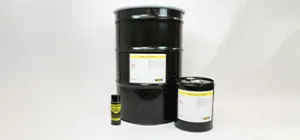
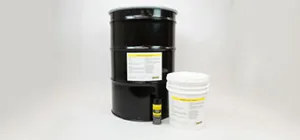
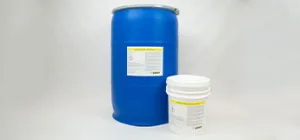
Axxanol™ A35-8030 is a long-term rust preventative oil that forms a light, thin, oily film. As a result, it provides powerful corrosion protection against aggressive environments, such as salt air and humidity. In addition to corrosion protection, it provides lubricating properties that help reduce friction and support smooth assembly and disassembly of metal parts.
Axxanol™ Spray-G is a sprayable rust preventative grease that provides the protection of a grease in the convenience of a sprayable form. It’s designed to protect metal parts, equipment, and assemblies during long-term indoor and outdoor storage and challenging overseas shipping applications where a removable coating is essential.
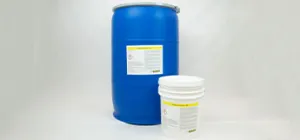
Axxatec™ 30C is a water-based rust Inhibitor designed to provide short-term indoor storage and in-transit protection. In addition to the corrosion protection offered, Axxatec™ 30C may also be used as a light-duty cleaner-rust preventative combination product.
Axxatec™ 48C is a water-based aluminum rust preventative liquid concentrate that also protects ferrous and yellow metals during indoor storage, shipping, and assembly.
To provide the best experiences, we use technologies like cookies to store and/or access device information. Consenting to these technologies will allow us to process data such as browsing behavior or unique IDs on this site. Not consenting or withdrawing consent, may adversely affect certain features and functions.
Functional
Always active
The technical storage or access is strictly necessary for the legitimate purpose of enabling the use of a specific service explicitly requested by the subscriber or user, or for the sole purpose of carrying out the transmission of a communication over an electronic communications network.
Preferences
The technical storage or access is necessary for the legitimate purpose of storing preferences that are not requested by the subscriber or user.
Statistics
The technical storage or access that is used exclusively for statistical purposes.The technical storage or access that is used exclusively for anonymous statistical purposes. Without a subpoena, voluntary compliance on the part of your Internet Service Provider, or additional records from a third party, information stored or retrieved for this purpose alone cannot usually be used to identify you.
Marketing
The technical storage or access is required to create user profiles to send advertising, or to track the user on a website or across several websites for similar marketing purposes.
To provide the best experiences, we use technologies like cookies to store and/or access device information. Consenting to these technologies will allow us to process data such as browsing behavior or unique IDs on this site. Not consenting or withdrawing consent, may adversely affect certain features and functions.
Functional
Always active
The technical storage or access is strictly necessary for the legitimate purpose of enabling the use of a specific service explicitly requested by the subscriber or user, or for the sole purpose of carrying out the transmission of a communication over an electronic communications network.
Preferences
The technical storage or access is necessary for the legitimate purpose of storing preferences that are not requested by the subscriber or user.
Statistics
The technical storage or access that is used exclusively for statistical purposes.The technical storage or access that is used exclusively for anonymous statistical purposes. Without a subpoena, voluntary compliance on the part of your Internet Service Provider, or additional records from a third party, information stored or retrieved for this purpose alone cannot usually be used to identify you.
Marketing
The technical storage or access is required to create user profiles to send advertising, or to track the user on a website or across several websites for similar marketing purposes.

 When you mention the words “rust season” to someone in the