In industrial and automotive maintenance, cleaning parts efficiently while minimizing environmental impact is a critical concern. As a result, aqueous parts washers have emerged as the superior solution, offering effective cleaning with a focus on sustainability.
Unlike traditional solvent-based systems, aqueous cleaning relies on water-based detergents, mechanical agitation, and heat to remove contaminants without generating harmful emissions.
What is an Aqueous Parts Washer?
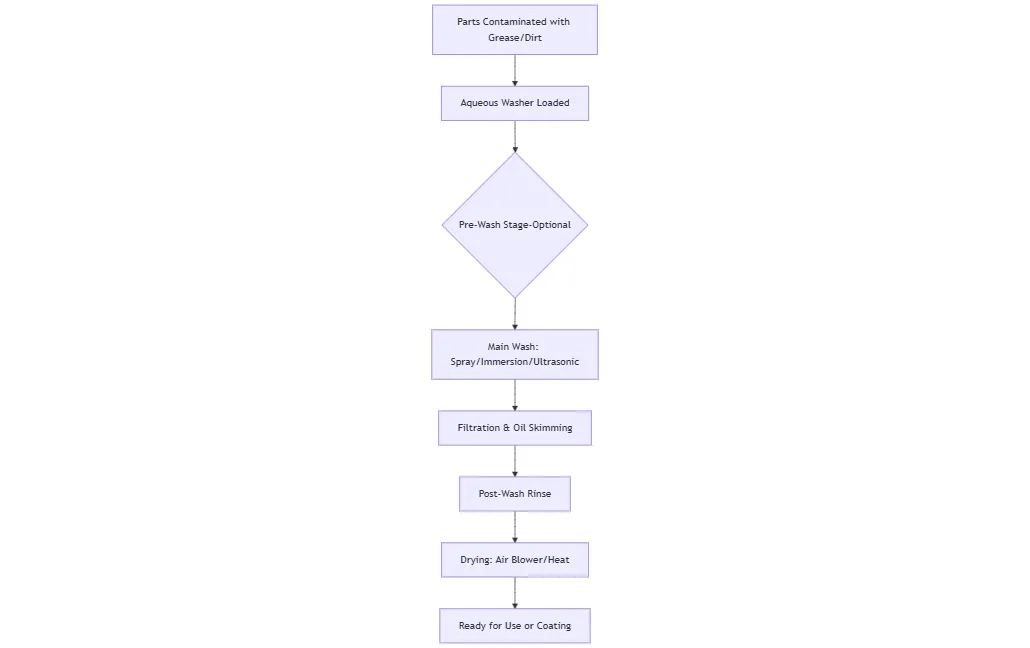
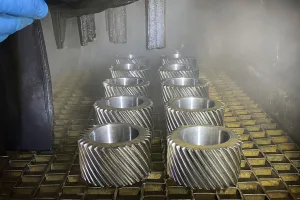
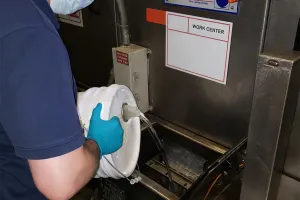
Aqueous parts washers are specialized cleaning systems that use water-based solutions combined with surfactants, emulsifiers, and agitation methods to remove grease, oils, and debris from metal and plastic components. Furthermore, these systems operate through various cleaning mechanisms:
Spray Washers – Utilize high-pressure water jets to clean parts efficiently.
Immersion Cleaners – Submerge parts in a cleaning solution, often with ultrasonic waves for deeper penetration.
Rotary Basket Systems – Rotate parts within the cleaning chamber to ensure thorough coverage.
Ultrasonic Cleaners – Use high-frequency sound waves to agitate cleaning solutions and dislodge contaminants at a microscopic level.
Aqueous cleaning is recognized for its ability to provide high-performance cleaning while significantly reducing hazardous waste and VOC emissions.
Looking for Industrial Cleaners and Degreasers for your Aqueous Parts Washers?
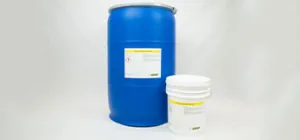
ZERUST® industrial cleaners and degreasers are designed to remove oils, grease, and contaminants while helping protect metal surfaces from corrosion during Aqueous Parts Washing. Explore our full range of aqueous cleaning solutions engineered for industrial and manufacturing applications.
Chemical solvents (e.g., trichloroethylene, perchloroethylene)
Environmental Impact
Low emissions, biodegradable waste
High VOC emissions, hazardous waste generation
Occupational Safety
Reduced exposure risks
Can cause respiratory and skin issues
Waste Disposal
Easier, less regulated
Strictly regulated, hazardous waste disposal is required
Operating Costs
Lower long-term costs
Higher due to chemical purchases and waste disposal
Why Choose Aqueous Over Solvent Cleaning?
Health & Safety: Solvent-based cleaners pose significant health risks due to their toxic and volatile nature, whereas aqueous cleaning reduces exposure to harmful chemicals.
Regulatory Compliance: Aqueous systems help companies avoid stringent environmental regulations associated with solvent-based cleaning.
Operational Savings: While initial investments in aqueous cleaning equipment may be higher, long-term cost savings on solvents, hazardous waste disposal, and regulatory fines make it the more economical choice.
Learn More About Water-Based vs. Solvent-Based Parts Washers
Understanding the differences between water-based and solvent-based degreasers can help manufacturers improve safety, environmental compliance, and cleaning performance. Explore how modern aqueous cleaning solutions compare to traditional solvent systems.
Understanding the Chemistry Behind Aqueous Parts Washing
Surfactants
Surfactants play a critical role in aqueous cleaning by reducing surface tension and emulsifying grease and oils. These are categorized into:
Anionic Surfactants: Effective at breaking down grease and dirt.
Non-Ionic Surfactants: Commonly used in environmentally friendly formulations due to their biodegradability.
Amphoteric Surfactants: Provide mild cleaning with corrosion resistance.
Builders & Alkalinity Regulators
Builders enhance cleaning performance by softening water and increasing alkalinity. Common types include:
Sodium Hydroxide & Potassium Hydroxide: Effective degreasers but can be harsh on some metals.
Silicates: Provide corrosion protection while aiding in emulsification.
Carbonates & Phosphates: Improve buffering capacity and detergency.
Corrosion Inhibitors
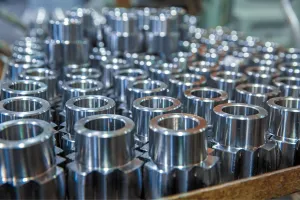
Since aqueous cleaning involves water, the risk of rust formation must be managed. Anti-corrosion inhibitors help protect metal parts post-cleaning.
Prevent Flash Rust in Your Aqueous Parts Washer
After aqueous part washing, exposed metal surfaces can quickly develop flash rust. Learn how ZERUST® AxxaWash™ cleaning solutions help remove contaminants while providing built-in corrosion protection to keep freshly cleaned parts rust-free.
Regulatory Compliance: Avoid fines and regulatory complications associated with solvent-based alternatives
Explore Sustainable Aqueous Parts Washer Practices
Aqueous part washer systems support safer operations and improved environmental performance. Learn how sustainable parts cleaning practices help manufacturers reduce hazardous waste, improve efficiency, and maintain high cleaning performance.
Conclusion: Aqueous Parts Washers as the Future of Industrial Cleaning
Aqueous parts washers provide an eco-friendly, cost-effective, and highly efficient method of cleaning industrial and automotive components. With advancements in chemistry, filtration, and automation, these systems continue to improve, offering superior performance over traditional solvent-based methods. By implementing aqueous cleaning technology, businesses not only enhance cleaning efficiency but also ensure compliance with environmental regulations while promoting worker safety.
For industries seeking a sustainable and highly effective cleaning solution, aqueous parts washers remain the optimal choice.
Need Help Optimizing Your Parts Cleaning Process?
ZERUST® corrosion experts can help you select the right cleaning solutions, corrosion inhibitors, and protection methods for your aqueous parts washer system. Contact our team to discuss your application and discover solutions designed to improve cleaning performance while preventing corrosion.
Tom White is the Marketing Manager at ZERUST®, bringing nearly a decade of experience in Vapor Corrosion Inhibitor (VCI) technologies and corrosion prevention solutions. He holds a degree in marketing from St. Cloud State University and specializes in translating complex technical solutions into clear, effective messaging that resonates with industrial audiences.
In his role, Tom leads strategic marketing initiatives that promote ZERUST®’s global product portfolio, including sustainable VCI packaging films, rust preventative coatings, and industrial cleaning solutions. He works closely with technical teams, sales leaders, and international partners to ensure that product positioning aligns with real-world applications and customer needs across industries such as manufacturing, transportation, and infrastructure.
Tom is actively involved in product launches, trade show planning, digital marketing strategy, and content development. His work focuses on connecting ZERUST®’s corrosion prevention technologies with engineers, manufacturers, and decision-makers who rely on effective asset protection and operational reliability.
With a strong emphasis on customer engagement and market insight, Tom helps bridge the gap between technical expertise and business impact. He supports initiatives that highlight how corrosion prevention improves equipment lifespan, reduces downtime, and contributes to more sustainable operations.
Through his contributions to the ZERUST® blog, Tom shares insights on corrosion prevention strategies, industry trends, and product applications. His content is designed to educate and inform while helping organizations identify the right solutions to protect valuable metal assets and optimize long-term performance.
Discover Proven Corrosion Prevention Solutions
Explore ZERUST® technologies designed to protect your metal assets, improve reliability, and support long-term performance.
AxxaWash™ KF-121 is a low foam, alkaline, water-based metal cleaner that effectively removes light to medium-duty hydrocarbon soils from ferrous substrates. Additionally, it also serves as the ideal metal cleaner for applications requiring low temperatures.
AxxaWash™ KF-122 is a low-foaming, heavy-duty alkaline, water-based cleaner compatible with very hard water in a wide range of operating temperatures. Additionally, it also maintains low foaming under spray conditions.
ZERUST®/EXCOR® AxxaWash™ KF-123 is a low-foaming, mildly alkaline, high-performance water-based industrial parts washer that is designed for cleaning ferrous substrates. In addition, AxxaWash™ KF-123 provides flash-rust inhibition.
AxxaWash™ KF-124 is a low-foaming, mildly alkaline, water-based degreaser & cleaner with low operating temperatures. In addition to cleaning, AxxaWash™ KF-124 provides flash-rust inhibition.
AxxaWash™ KMS-220 is a low foam, low temperature, mildly alkaline water-based part cleaner with excellent oil-splitting capabilities. In addition, AxxaWash™ KMS-220 provides flash-rust inhibition.
AxxaWash™ KMS-305AL is a low foam, low temperature, alkaline water-based aluminum part cleaner designed for use with aluminum and ferrous metals in spray systems with its excellent oil-splitting capabilities.
AxxaWash™ KMS-310AL is a low-foaming, alkaline, water-based aluminum and ferrous cleaner that’s designed to be used in immersion, ultrasonic, spray, or drum washer processes.
AxxaWash™ NW-10C is a mildly alkaline, water-based preservation cleaner with a wide range of operating temperatures. In addition to flash-rust inhibition, it also removes and deactivates sources of corrosion such as chlorides, oils, and contaminants.
AxxaWash™ NW-12C is a mildly alkaline, water-based ultrasonic cleaning solution with a wide range of operating temperatures. In addition, it can be used in immersion and spray cleaning modes.
To provide the best experiences, we use technologies like cookies to store and/or access device information. Consenting to these technologies will allow us to process data such as browsing behavior or unique IDs on this site. Not consenting or withdrawing consent, may adversely affect certain features and functions.
Functional
Always active
The technical storage or access is strictly necessary for the legitimate purpose of enabling the use of a specific service explicitly requested by the subscriber or user, or for the sole purpose of carrying out the transmission of a communication over an electronic communications network.
Preferences
The technical storage or access is necessary for the legitimate purpose of storing preferences that are not requested by the subscriber or user.
Statistics
The technical storage or access that is used exclusively for statistical purposes.The technical storage or access that is used exclusively for anonymous statistical purposes. Without a subpoena, voluntary compliance on the part of your Internet Service Provider, or additional records from a third party, information stored or retrieved for this purpose alone cannot usually be used to identify you.
Marketing
The technical storage or access is required to create user profiles to send advertising, or to track the user on a website or across several websites for similar marketing purposes.
To provide the best experiences, we use technologies like cookies to store and/or access device information. Consenting to these technologies will allow us to process data such as browsing behavior or unique IDs on this site. Not consenting or withdrawing consent, may adversely affect certain features and functions.
Functional
Always active
The technical storage or access is strictly necessary for the legitimate purpose of enabling the use of a specific service explicitly requested by the subscriber or user, or for the sole purpose of carrying out the transmission of a communication over an electronic communications network.
Preferences
The technical storage or access is necessary for the legitimate purpose of storing preferences that are not requested by the subscriber or user.
Statistics
The technical storage or access that is used exclusively for statistical purposes.The technical storage or access that is used exclusively for anonymous statistical purposes. Without a subpoena, voluntary compliance on the part of your Internet Service Provider, or additional records from a third party, information stored or retrieved for this purpose alone cannot usually be used to identify you.
Marketing
The technical storage or access is required to create user profiles to send advertising, or to track the user on a website or across several websites for similar marketing purposes.