Rust can be an ugly sight. However, industries that rely on non-corroded metal cannot afford rust. It leads to serious consequences that are not always visible, including lost productivity, accidents, and significant financial loss. Companies lose billions of dollars each year due to corrosion and the overall cost of corrosion.
Most enterprises don’t understand the true cost of corrosion. But a recent report from NACE International details just how extensive and expensive a problem corrosion really is.
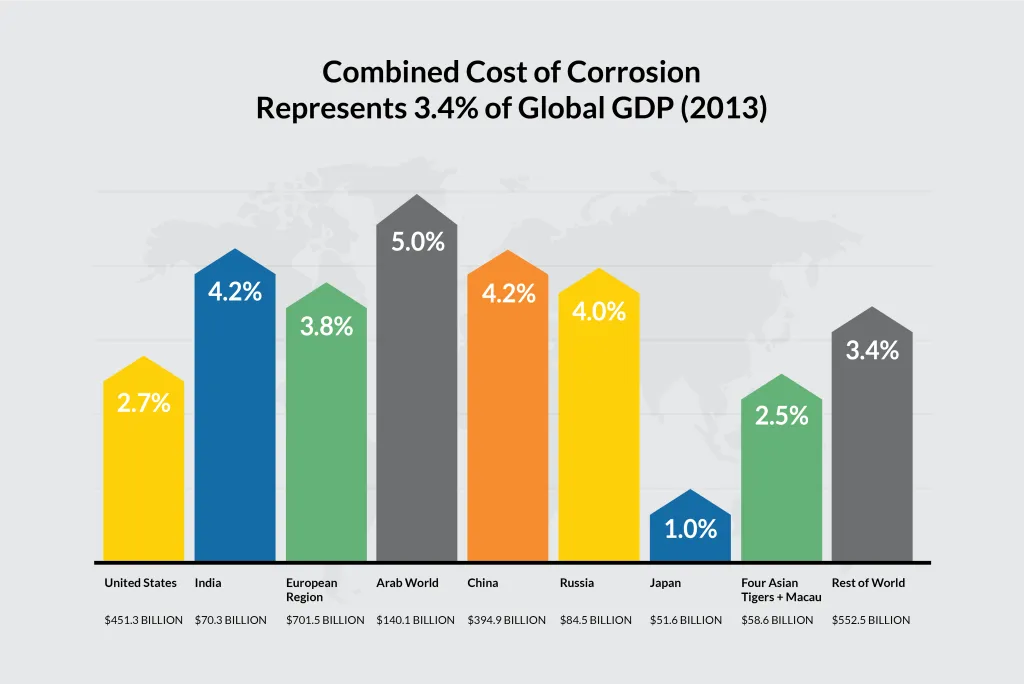
To put it simply, the total cost of corrosion across the globe is astronomical. According to the report, the cost of corrosion totals an estimated $2.5 trillion (USD). This figure does not include individual safety or environmental consequences.
That $2.5 trillion sum is nearly 3.4% percent of the global gross domestic product (GDP) — needless to say, corrosion is a massive, costly problem.
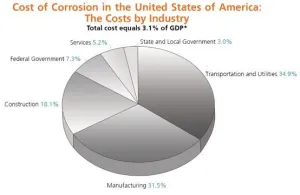
In the U.S. specifically, the numbers on corrosion are proportionally similar. For example, the U.S. Federal Highway Administration found that costs directly associated with metallic corrosion added up to $276 billion, or 3.1% of the U.S.’s GDP.
Unfortunately, most organizations fail to recognize the true financial and operational impact of corrosion until it reaches crisis mode. For example, a business could reach a point where the cost to repair materials due to corrosion outweighs the overall profit. Or worse, a company could experience accidents resulting from corrosive equipment.
Given the magnitude of this issue, the purpose of this article is to share information on prevention and control solutions for corrosion. Proactively implementing corrosion controls can save companies significant amounts of money. According to NACE International’s report, it’s estimated that if more people used those solutions, the total savings across the globe could be anywhere between $357 and $875 billion (USD) annually. That’s between 15 and 35% of the total cost of corrosion, which is no small feat.
Calculate the True Cost of Corrosion
Use our corrosion cost calculator to estimate how much corrosion could be impacting your operation and identify potential savings opportunities.
Corrosion makes its impact in various industries—each of which is feeling the financial cost that rust brings. For example, in the U.S., it’s estimated that there are 240,000 water main breaks annually, the majority of which are because of corrosion. When corroded pipes fail, and water main breaks happen, it’s expensive to replace the pipes. But those breaks also cause water disruptions to homes and schools; cause unscheduled repair work, which can affect transportation and commerce; and the availability of freshwater can be compromised, especially in places affected by drought.
Of course, there’s plenty of piping in the U.S. that’s not carrying water. Instead, pipelines carrying dry gas, wet gas, and crude oil run throughout the country. When corrosion affects those oil and gas pipes, not only is it expensive to replace, but it can also cause expensive disasters if a rusted pipe were to fail.
Even the Department of Defense carries a significant cost of corrosion: a whopping $20 billion. Corrosion impacts the DoD’s planes, vehicles, and other physical infrastructure. So it’s no wonder that within a bureaucracy as large as the DoD, the cost of corrosion is significant.
According to NACE’s report, to stay ahead of the dangerous and costly consequences of corrosion, it’s actually “mandatory” that organizations implement a Corrosion Management System (or a CMS). So next, we dig further into implementing a CMS.
What is a Corrosion Management System?
According to NACE, a CMS is the “documented set of processes and procedures required for planning, executing, and continually improving the ability of an organization to manage the threat of corrosion for existing and future assets and asset systems.”
To create a CMS that works for your organization, the key is to balance a solid corrosion technology with a sound management system — combining these two elements gives organizations the efficiency they need to prevent corrosion effectively and, in turn, increase the bottom line.
Within a CMS, there are two management categories:
Management System Elements
Policy
Strategy
Objectives
Enablers, Controls, and Measures (like Incident Investigation, Documentation, Risk Management, and Communication
These are the elements that address all threats, even ones not associated with corrosion (which are still essential to mitigate corrosion issues)
Cost of Corrosion: Specific Control Elements
Plans (based on the type of corrosion, ROI, how critical the asset is, its life cycle, and industry regulations)
Procedures and Working Practices (how to implement, mitigation procedures, and inspection)
All in all, specific corrosion management ideally is a piece that fits naturally into the overall management framework at an organization.
Build an Effective Corrosion Management Strategy
Learn how ZERUST® applies a structured corrosion management approach to reduce risk, improve asset life, and lower the cost of corrosion.
Implementing a Corrosion Management System to Reduce The Cost of Corrosion
The most important part of a CMS is that it needs to be applied throughout an asset’s entire life cycle. So, to be as efficient as possible — and reap the long-term financial benefits of avoiding corrosion—it must be integrated into an asset’s:
Design
Manufacturing/construction
Operation/maintenance
Abandonment, decommissioning, and mothballing (ADM)
Measuring the Business Impact and Cost of Corrosion
Lowering the risk of corrosion and proactively controlling it when it does appear can be a valuable focus for countless industries. According to NACE, there are several business impact criteria that organizations can measure when evaluating the cost of corrosion:
Direct costs (revenue lost)
People (injuries/fatalities)
Repair (cost of parts and labor for replacement)
Major Accident Potential
Loss of reputation (potential loss of clients or staff; increased borrowing costs; more government oversight)
Corrosion Control is a Business Strategy to Reduce The Cost of Corrosion
Corrosion control is often deprioritized or overlooked in a company because stakeholders aren’t aware of the upside of proactive corrosion control. However, the profits can be significant when corrosion control is implemented well.
“An effective corrosion management program is necessary for successful operations,” Sameer V. Ghalsasi says, a NACE International member. “This process starts as early as the conceptual design phase, and it continues throughout the design life of the facility.”
Corrosion control should be a built-in consideration during the planning phase if a business is in its early stages. Budget and resources should be devoted to corrosion control practices. For existing enterprises, the operations department is the most logical place for corrosion control practices to live. Dedicating projects and even staff members to activating and maintaining corrosion prevention should be ongoing. To emphasize the benefits of corrosion control, read this case study that reflects the power of corrosion control in a business.
Reducing the Cost of Corrosion: A Success Story
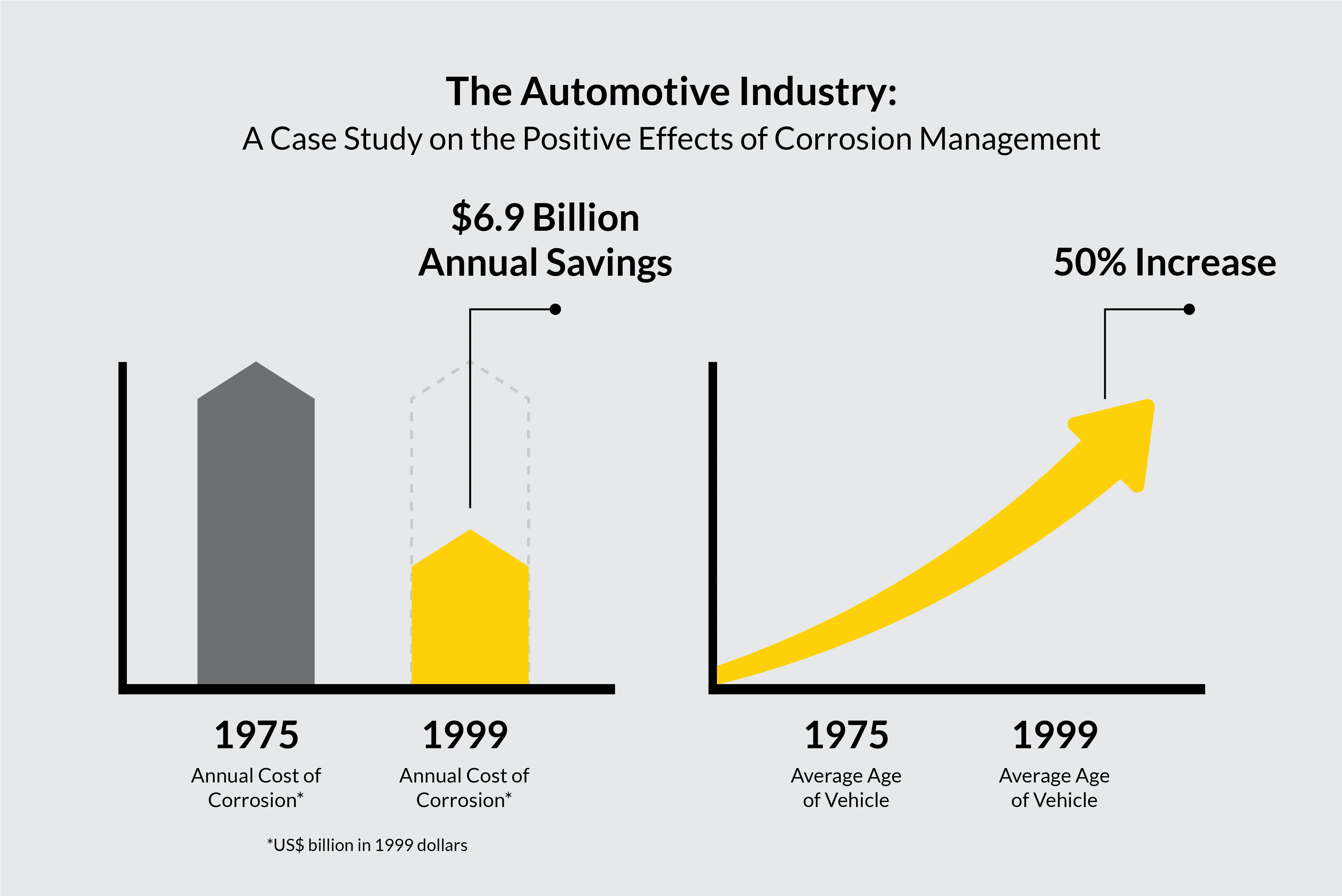
NACE’s report details one of the biggest success stories globally when it comes to corrosion control — the automotive industry. Before 1975, car manufacturers used minimal corrosion control solutions, and it showed. The life cycle of the cars these companies created often depended on the corrosion of the body. And corrosion was costing the auto industry billions of dollars annually.
However, after 1975, the world’s top car manufacturers put a renewed focus on corrosion control, moving forward with advanced painting/coating technology and corrosion-resistant materials.
By 1999, the automotive industry saved an estimated $9.6 billion annually. And, perhaps most importantly for both the companies and consumers, the average age of vehicles increased by nearly 50% from 1975 to 1999.
Corrosion, of course, affects countless industries. But the automotive industry is one that recognized early the true cost of corrosion — and the importance of proactively figuring out solutions to control it.
According to NACE, it’s critical that organizations come up with comprehensive Corrosion Management Systems. The cost of industrial rust is enormous. However, organizations can mitigate 15 to 35% of the financial cost of corrosion worldwide by implementing a CMS. And when we’re talking about numbers that are equal to more than 3% of the worldwide GDP, that’s no small task.
A Future of Corrosion Control
Now that we’ve outlined the clear financial impact of corrosion, it’s essential to focus on a future of corrosion management. This starts at the enterprise level, within operations departments, and through corrosion-specific initiatives. Corrosion management also happens through strategic investment in corrosion control practices and materials.
ZERUST®/EXCOR® offers a complete line of corrosion inhibitor packaging and rust solutions. ZERUST® is the inventor of Volatile Corrosion Inhibitor (VCI) poly technology and offers expert on-site support in over 70 countries worldwide. For nearly 50 years, ZERUST® has helped customers reduce the cost and problems associated with corrosion. Have a challenging corrosion prevention need, such as overseas shipping or storage in corrosive environments? Trust ZERUST® to help you manage corrosion in your operations.
Ready to Reduce the Cost of Corrosion?
Connect with a ZERUST® corrosion specialist to evaluate your environment, assets, and processes. Discover proven solutions that protect metal and improve profitability.
Tom White is the Marketing Manager at ZERUST®, bringing nearly a decade of experience in Vapor Corrosion Inhibitor (VCI) technologies and corrosion prevention solutions. He holds a degree in marketing from St. Cloud State University and specializes in translating complex technical solutions into clear, effective messaging that resonates with industrial audiences.
In his role, Tom leads strategic marketing initiatives that promote ZERUST®’s global product portfolio, including sustainable VCI packaging films, rust preventative coatings, and industrial cleaning solutions. He works closely with technical teams, sales leaders, and international partners to ensure that product positioning aligns with real-world applications and customer needs across industries such as manufacturing, transportation, and infrastructure.
Tom is actively involved in product launches, trade show planning, digital marketing strategy, and content development. His work focuses on connecting ZERUST®’s corrosion prevention technologies with engineers, manufacturers, and decision-makers who rely on effective asset protection and operational reliability.
With a strong emphasis on customer engagement and market insight, Tom helps bridge the gap between technical expertise and business impact. He supports initiatives that highlight how corrosion prevention improves equipment lifespan, reduces downtime, and contributes to more sustainable operations.
Through his contributions to the ZERUST® blog, Tom shares insights on corrosion prevention strategies, industry trends, and product applications. His content is designed to educate and inform while helping organizations identify the right solutions to protect valuable metal assets and optimize long-term performance.
Discover Proven Corrosion Prevention Solutions
Explore ZERUST® technologies designed to protect your metal assets, improve reliability, and support long-term performance.
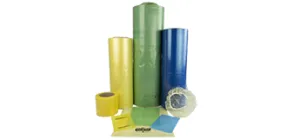
ICT®510-C VCI Film provides cost-effective and versatile protection against rust and corrosion damage for metal assets in shipping and storage. Additionally, it’s available in ferrous, non-ferrous, and multimetal formulations, as well as various-sized rolls, sheets, tubing, and bags.
ICT®420 is an acid-free, pH-neutral, and non-abrasive VCI kraft paper that merges the practicality and cost-efficiency of paper-based packaging with advanced corrosion protection. Consequently, it streamlines the preservation of metals during work-in-progress, shipping, and storage.
ActivDri™ PWA Packets are patent-pending, economical, effective, and easy-to-use dual-action, moisture control Vapor Corrosion Inhibitor (VCI) packets that protect against environmental contaminants and humidity that aggressively corrode metal parts, components, electronics, and electrical components/equipment
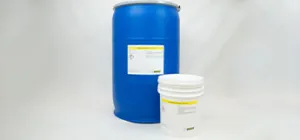
ZERUST®/EXCOR® AxxaWash™ KF-123 is a low-foaming, mildly alkaline, high-performance water-based industrial parts washer that is designed for cleaning ferrous substrates. In addition, AxxaWash™ KF-123 provides flash-rust inhibition.
Axxanol™ A35-8030 is a long-term rust preventative oil that forms a light, thin, oily film. As a result, it provides powerful corrosion protection against aggressive environments, such as salt air and humidity. In addition to corrosion protection, it provides lubricating properties that help reduce friction and support smooth assembly and disassembly of metal parts.
AxxaClean™ ICT®625-RR chelating rust remover is a pH-neutral immersion that recovers mildly to moderately rusted ferrous parts. Simply soak the affected parts in the ready-to-use liquid to eliminate rust on surfaces, as well as in hard-to-reach areas.
To provide the best experiences, we use technologies like cookies to store and/or access device information. Consenting to these technologies will allow us to process data such as browsing behavior or unique IDs on this site. Not consenting or withdrawing consent, may adversely affect certain features and functions.
Functional
Always active
The technical storage or access is strictly necessary for the legitimate purpose of enabling the use of a specific service explicitly requested by the subscriber or user, or for the sole purpose of carrying out the transmission of a communication over an electronic communications network.
Preferences
The technical storage or access is necessary for the legitimate purpose of storing preferences that are not requested by the subscriber or user.
Statistics
The technical storage or access that is used exclusively for statistical purposes.The technical storage or access that is used exclusively for anonymous statistical purposes. Without a subpoena, voluntary compliance on the part of your Internet Service Provider, or additional records from a third party, information stored or retrieved for this purpose alone cannot usually be used to identify you.
Marketing
The technical storage or access is required to create user profiles to send advertising, or to track the user on a website or across several websites for similar marketing purposes.
To provide the best experiences, we use technologies like cookies to store and/or access device information. Consenting to these technologies will allow us to process data such as browsing behavior or unique IDs on this site. Not consenting or withdrawing consent, may adversely affect certain features and functions.
Functional
Always active
The technical storage or access is strictly necessary for the legitimate purpose of enabling the use of a specific service explicitly requested by the subscriber or user, or for the sole purpose of carrying out the transmission of a communication over an electronic communications network.
Preferences
The technical storage or access is necessary for the legitimate purpose of storing preferences that are not requested by the subscriber or user.
Statistics
The technical storage or access that is used exclusively for statistical purposes.The technical storage or access that is used exclusively for anonymous statistical purposes. Without a subpoena, voluntary compliance on the part of your Internet Service Provider, or additional records from a third party, information stored or retrieved for this purpose alone cannot usually be used to identify you.
Marketing
The technical storage or access is required to create user profiles to send advertising, or to track the user on a website or across several websites for similar marketing purposes.