Post-Consumer Recycling is becoming an essential strategy for companies seeking to reduce waste, lower their carbon footprint, and support a circular economy. At ZERUST®, we actively integrate Post-Consumer Recycling into our Vapor Corrosion Inhibitor (VCI) polymer packaging solutions to help industries protect metal assets while reducing environmental impact.
To further advance sustainable packaging, ZERUST® partnered with RecycleMax® to launch the ZeCycle Recycling Program, a closed-loop recycling initiative that allows customers to recycle used ZERUST® VCI films and plain polyethylene packaging into new ZERUST® ICT®510-PCR film products.
Through this program, ZERUST® helps businesses protect metal components from corrosion while reducing the demand for virgin plastics and supporting zero-waste and sustainability goals.
Understanding Post-Consumer Recycling
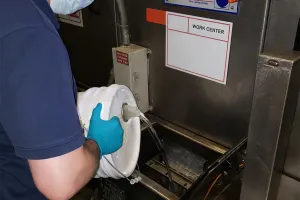
Post-Consumer Recycling refers to the collection, processing, and reuse of materials that consumers have used and discarded. The process typically includes decontamination, washing, sorting, and reprocessing materials into new usable products.
This recycling approach plays a critical role in reducing landfill waste, conserving resources, and lowering the environmental impact of traditional disposal methods, such as incineration.
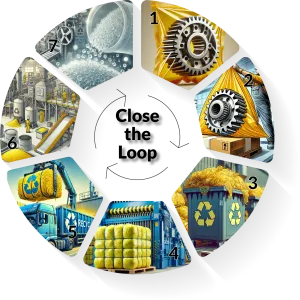
The ZeCycle Recycling Program simplifies Post-Consumer Recycling for customers by managing the entire logistics chain. Used VCI films are collected directly from customer facilities, transported to recycling centers, and processed into post-consumer recycled (PCR) pellets. These pellets are then remanufactured into new ZERUST® PCR film products.
This closed-loop system helps keep plastic materials in circulation while reducing environmental impact and supporting sustainable packaging practices.
See How ZeCycle Supports Post-Consumer Recycling
Learn how the ZERUST® ZeCycle Recycling Program helps companies implement Post-Consumer Recycling by collecting used VCI packaging and converting it into new PCR films. Discover how your facility can reduce waste while maintaining corrosion protection performance.
Why Post-Consumer Recycling Matters for the Environment
1. Waste Reduction
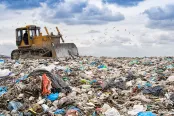
Post-Consumer Recycling helps divert plastic waste from landfills and incinerators. Landfills release greenhouse gases and toxic chemicals, while incineration contributes to air pollution.
A report from EA Environmental Action indicates that in 2023, approximately 68.6 million tons of plastic were discarded into the natural environment due to gaps in recycling infrastructure and waste management systems.
Programs such as ZeCycle allow companies to recycle used VCI packaging into new PCR materials, preventing these plastics from contributing to global waste.
2. Resource Conservation
Post-Consumer Recycling helps conserve natural resources, particularly petroleum used to produce polymer packaging materials.
By using PCR resins instead of virgin plastic, manufacturers can significantly reduce the demand for newly extracted petroleum resources. This is especially important because petroleum takes millions of years to form, and extraction carries environmental impacts.
Programs like ZeCycle help reduce reliance on virgin raw materials while supporting responsible resource management.
3. Energy Savings
Producing new plastic materials requires significant energy at petrochemical refineries. In contrast, Post-Consumer Recycling requires far less energy because the polymer already exists and only needs reprocessing.
By recycling post-consumer polymers through programs like ZeCycle, companies can reduce energy consumption while supporting corporate sustainability goals.
4. Pollution Reduction
Post-Consumer Recycling helps reduce environmental pollution by limiting the need for new resource extraction and refining processes.
Traditional refining operations generate emissions that contribute to air and water pollution. Recycling reduces these impacts while helping protect natural ecosystems.
By choosing PCR materials, companies actively support cleaner production systems and help reduce environmental pollution associated with new-material manufacturing.
5. Economic Benefits
Post-Consumer Recycling also supports economic growth. The recycling industry continues to expand, creating jobs in material collection, sorting, processing, and manufacturing.
As recycling infrastructure grows worldwide, Post-Consumer Recycling will become more efficient and cost-effective, helping reduce the overall cost of materials and waste management.
6. Conservation of Landfill Space
Landfill capacity remains limited in many regions. Expanding landfill infrastructure requires significant land use and environmental planning.
Post-Consumer Recycling reduces pressure on landfill systems by redirecting recyclable materials into new manufacturing streams. This approach helps preserve land resources while supporting responsible waste management.
7. Supporting the Circular Economy
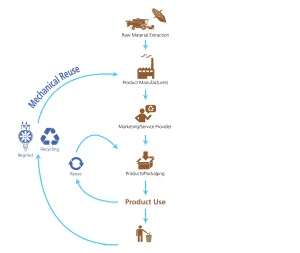
Post-Consumer Recycling plays a central role in building a circular economy, where materials remain in productive use for as long as possible.
The ZeCycle Recycling Program demonstrates this circular model for VCI packaging:
ZERUST® VCI films protect metal components during storage and transportation
Used packaging is collected from customer facilities
RecycleMax® transports materials to specialized recycling centers
Materials are processed into PCR pellets
PCR pellets are used to manufacture new ZERUST® ICT®510-PCR films
Through this system, packaging materials remain in circulation rather than becoming waste.
See Post-Consumer Recycled VCI Packaging in Action
Discover how companies are reducing their plastic footprint by using ZERUST® Post-Consumer Recycled VCI packaging. This case study shows how PCR materials can support sustainability goals while maintaining reliable corrosion protection.
Challenges with Post-Consumer Recycling in VCI Packaging
Although Post-Consumer Recycling provides significant environmental benefits, several challenges must be addressed when implementing PCR materials in industrial packaging.
Collection and Transportation
Efficient collection systems are necessary to gather used materials from many facilities and transport them to recycling centers.
The ZeCycle Recycling Program simplifies this process by coordinating collection and transportation for ZERUST® customers. RecycleMax® manages pickups, optimizes transport routes, and reduces logistical complexity.
Sorting
Accurate sorting ensures that only compatible materials enter the PCR recycling stream. Contamination from other plastics or non-recyclable materials can reduce the quality of recycled resins.
RecycleMax® works with customers to provide training and best practices for sorting recyclable VCI and polyethylene materials, helping maintain material quality.
Decontamination
Recycled materials must be cleaned to remove residues and contaminants before processing.
Through the ZeCycle program, customers receive guidance on handling used VCI packaging to minimize contamination. Proper storage and preparation improve recycling efficiency and reduce the environmental impact of cleaning processes.
Consistency of Recycled Materials
PCR materials often come from different sources, leading to variations in material properties.
ZERUST® addresses this challenge by closely monitoring and qualifying PCR resins used in ICT®510-PCR products. Materials are tested to ensure they meet the same performance requirements expected from ZERUST® packaging solutions.
Performance Requirements
Industrial VCI packaging must meet strict standards for mechanical strength, durability, and corrosion protection.
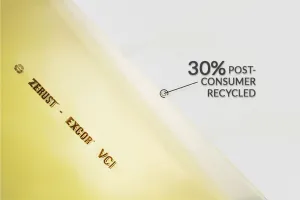
ZERUST® ensures that ICT®510-PCR30 films perform consistently with ICT®510-C products made from virgin resins. Extensive laboratory testing verifies that PCR films deliver reliable corrosion protection and packaging durability.
ZERUST® Commitment to Sustainability
ZERUST® recognizes the importance of integrating Post-Consumer Recycling into corrosion protection packaging solutions.
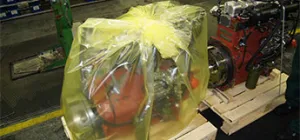
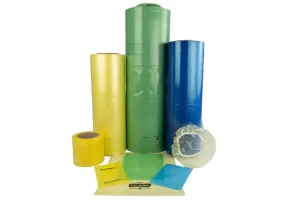
VCI polymer packaging protects metal components from corrosion during storage and transportation. By incorporating post-consumer recycled materials into these packaging products, ZERUST® reduces reliance on virgin plastics while supporting a circular economy.
Extending the lifespan of metal assets through effective corrosion prevention
Offering reusable and recyclable packaging options
Supporting industries in reducing waste and environmental impact
Advancement in Sustainable Packaging with PCR
Post-Consumer Recycling represents a critical step toward a more sustainable future. Through the ZeCycle Recycling Program, ZERUST® provides a closed-loop recycling system that transforms used VCI films into high-quality PCR packaging materials.
This program helps companies:
Reduce plastic waste
Lower reliance on virgin raw materials
Support circular economy initiatives
Maintain reliable corrosion protection for metal components
By combining sustainable recycling practices with advanced corrosion protection technology, ZERUST® enables businesses to protect their assets while contributing to global environmental responsibility.
Start Your Post-Consumer Recycling Strategy with ZERUST®
Interested in reducing plastic waste while protecting metal components from corrosion? Contact ZERUST® to learn how Post-Consumer Recycling and sustainable VCI packaging solutions can help your organization meet environmental goals without sacrificing performance.
Tom White is the Marketing Manager at ZERUST®, bringing nearly a decade of experience in Vapor Corrosion Inhibitor (VCI) technologies and corrosion prevention solutions. He holds a degree in marketing from St. Cloud State University and specializes in translating complex technical solutions into clear, effective messaging that resonates with industrial audiences.
In his role, Tom leads strategic marketing initiatives that promote ZERUST®’s global product portfolio, including sustainable VCI packaging films, rust preventative coatings, and industrial cleaning solutions. He works closely with technical teams, sales leaders, and international partners to ensure that product positioning aligns with real-world applications and customer needs across industries such as manufacturing, transportation, and infrastructure.
Tom is actively involved in product launches, trade show planning, digital marketing strategy, and content development. His work focuses on connecting ZERUST®’s corrosion prevention technologies with engineers, manufacturers, and decision-makers who rely on effective asset protection and operational reliability.
With a strong emphasis on customer engagement and market insight, Tom helps bridge the gap between technical expertise and business impact. He supports initiatives that highlight how corrosion prevention improves equipment lifespan, reduces downtime, and contributes to more sustainable operations.
Through his contributions to the ZERUST® blog, Tom shares insights on corrosion prevention strategies, industry trends, and product applications. His content is designed to educate and inform while helping organizations identify the right solutions to protect valuable metal assets and optimize long-term performance.
Discover Proven Corrosion Prevention Solutions
Explore ZERUST® technologies designed to protect your metal assets, improve reliability, and support long-term performance.
ICT®510-PCR30 Post-Consumer Recycled (PCR) VCI Film is a 30% recycled polyethylene film containing proven ZERUST® Vapor Corrosion Inhibitors (VCI), providing cost-effective and versatile protection against corrosion damage for metals in shipping and storage.
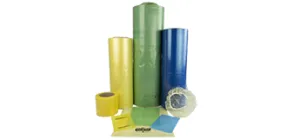
ICT®510-C VCI Film provides cost-effective and versatile protection against rust and corrosion damage for metal assets in shipping and storage. Additionally, it’s available in ferrous, non-ferrous, and multimetal formulations, as well as various-sized rolls, sheets, tubing, and bags.
ICT®510-C VCI Sheeting provides cost-effective and versatile protection against rust and corrosion damage for metal assets in shipping and storage. Additionally, it’s available in ferrous, non-ferrous, and multimetal formulations, as well as various-sized sheeting.
ICT® VCI Poly Bags provide convenient and proven protection against corrosion damage for metals in shipping and storage. In addition, they are available in ferrous, non-ferrous, anti-tarnish, and multimetal protection types and various zipper, flat, and gusseted sizes.
ICT®510-C VCI Tubing provides versatile protection against corrosion, as the tubing offers a tailored packaging solution for parts of various sizes or long metal assets metals in shipping, storage, and work-in-progress.

 Post-Consumer Recycling helps conserve natural resources, particularly petroleum used to produce polymer packaging materials.
 4. Pollution Reduction
 6. Conservation of Landfill Space
 7. Supporting the Circular Economy
 ZERUST® recognizes the importance of integrating Post-Consumer Recycling into corrosion protection packaging solutions.