When evaluating VCI vs desiccants for corrosion protection, it’s important to understand the difference between VCI and desiccants, because moisture control and corrosion inhibition are not the same thing. While desiccants absorb humidity, Vapor Corrosion Inhibitors (VCI) actively protect metal surfaces inside sealed packaging.
Furthermore, choosing the wrong method can lead to rust, warranty claims, or shipment delays. Consequently, it’s helpful to carefully consider the difference between VCI and desiccants and determine which approach is best for your corrosion protection needs in the VCI vs desiccant debate.
Let’s break down the differences in vci vs desiccant performance.
What Are Desiccants and How Do They Work?
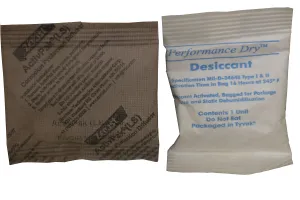
Desiccants such as silica gel, clay, or calcium chloride:
Absorb moisture from the air
Reduce relative humidity inside a sealed space
Work best in tightly sealed enclosures
However:
They do not directly protect metal surfaces
They do not stop corrosion caused by salts, contaminants, or fingerprints
Once saturated, they stop working
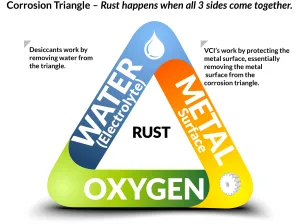
As a result, desiccants control moisture. Understanding the difference between VCI and desiccants is important here because desiccants do not inhibit corrosion directly at the metal surface.
Looking for reliable moisture control?
Check out desiccant options designed for industrial use.
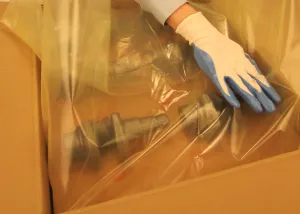
Vapor Corrosion Inhibitors (VCI) release protective molecules into enclosed packaging. These molecules:
Vaporize into the air
Condense onto exposed metal surfaces
Form an invisible, molecular corrosion-inhibiting layer
Interrupt the electrochemical corrosion process
Unlike desiccants, VCI technology:
✔ Protects multimetals
✔ Protects complex geometries
✔ Protects even when some humidity is present
✔ Leaves no residue upon removal
Consequently, ZERUST® ICT® technology enhances traditional VCI chemistry by providing controlled-release and multi-environment protection. In comparing vci versus desiccant products, it’s vital to know their respective strengths for asset protection.
Curious how VCIs work vs. Desiccants in your environment?
Contact our technical team for a customized recommendation.
Key takeaway: Desiccants manage moisture. VCIs protect metal from corrosion. In many applications, understanding the difference between VCI and desiccants helps engineers determine the best corrosion protection method.
When Should You Use Desiccants Instead of VCI?
Desiccants may be appropriate when:
Protecting electronics (without exposed metal risk)
Controlling condensation in shipping containers
Working in extreme humidity environments
Combined with VCI for layered protection. Thanks to vci vs desiccant strategies, you can address moisture and corrosion together.
When Should You Use VCI Instead of Desiccants?
When exploring VCI vs desiccant protection, understanding the difference between VCI and desiccants helps determine when VCI packaging is the best solution for:
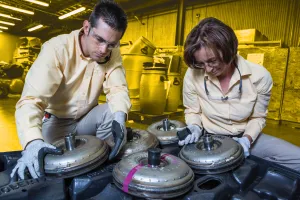
Shipping finished metal parts
Storing inventory long-term
Protecting complex assemblies
Preventing rust during WIP
Eliminating oil-based rust preventatives.
If your primary concern is corrosion, VCI is the engineered solution in the ongoing comparison between desiccants and vci vs desiccant approaches.
At ZERUST®, we understand the complexities of corrosion prevention and offer tailored solutions to meet your specific needs. As a result, our Technical Support team is equipped to analyze your current processes and recommend the most effective and cost-efficient solutions. Whether you need desiccants, VCIs, or a combination of both, ZERUST® is here to help you protect your valuable assets from corrosion. Contact us today for a comprehensive evaluation of your corrosion management strategy. Our team can help you understand the difference between VCI and desiccants and choose the right VCI vs desiccant solution for your application.
Tom White
Tom White is the Marketing Manager at ZERUST®, bringing nearly a decade of experience in Vapor Corrosion Inhibitor (VCI) technologies and corrosion prevention solutions. He holds a degree in marketing from St. Cloud State University and specializes in translating complex technical solutions into clear, effective messaging that resonates with industrial audiences.
In his role, Tom leads strategic marketing initiatives that promote ZERUST®’s global product portfolio, including sustainable VCI packaging films, rust preventative coatings, and industrial cleaning solutions. He works closely with technical teams, sales leaders, and international partners to ensure that product positioning aligns with real-world applications and customer needs across industries such as manufacturing, transportation, and infrastructure.
Tom is actively involved in product launches, trade show planning, digital marketing strategy, and content development. His work focuses on connecting ZERUST®’s corrosion prevention technologies with engineers, manufacturers, and decision-makers who rely on effective asset protection and operational reliability.
With a strong emphasis on customer engagement and market insight, Tom helps bridge the gap between technical expertise and business impact. He supports initiatives that highlight how corrosion prevention improves equipment lifespan, reduces downtime, and contributes to more sustainable operations.
Through his contributions to the ZERUST® blog, Tom shares insights on corrosion prevention strategies, industry trends, and product applications. His content is designed to educate and inform while helping organizations identify the right solutions to protect valuable metal assets and optimize long-term performance.
Discover Proven Corrosion Prevention Solutions
Explore ZERUST® technologies designed to protect your metal assets, improve reliability, and support long-term performance.
ActivDri™ PWA Packets are patent-pending, economical, effective, and easy-to-use dual-action, moisture control Vapor Corrosion Inhibitor (VCI) packets that protect against environmental contaminants and humidity that aggressively corrode metal parts, components, electronics, and electrical components/equipment
ZDC Desiccant Series features montmorillonite clay packaged in Tyvek material that offers an excellent barrier to water in liquid form while also allowing water vapors to pass through. This minimizes the risk of the desiccants causing corrosion that may come in direct contact with metals when compared to other desiccants made with different materials.
ActivPak® is a versatile and powerful fast-acting VCI sachet designed to address flash rust and corrosion concerns in demanding scenarios, including overseas shipping and polluted factory environments.
ActivPak®(LS) Flash Corrosion VCI Emitters offer fast-acting corrosion protection in challenging conditions, such as factories, marine environments, waste treatment facilities, and power plants.
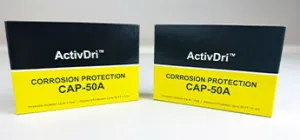
ActivDri™ CAP-50A is a dual-action moisture control capsule designed for enclosed industrial and electrical applications. It incorporates ZERUST® Intelligent Counter-Corrosion Technologies (ICT®) that offer slow and fast-releasing Vapor Corrosion Inhibitors (VCI) that settle on exposed metal surfaces to protect them against environmental contaminants and humidity that aggressively corrode metals during operation, shipping, and storage.
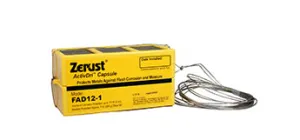
ActivDri™ FAD12-1 Desiccant VCI Capsule protects metals in hard-to-reach areas of enclosed spaces by utilizing Vapor Corrosion Inhibitors (VCIs) to prevent corrosion and a silica-gel desiccant to combat humidity that affects metals and electronics in corrosive environments such as salty air or power plants.
To provide the best experiences, we use technologies like cookies to store and/or access device information. Consenting to these technologies will allow us to process data such as browsing behavior or unique IDs on this site. Not consenting or withdrawing consent, may adversely affect certain features and functions.
Functional
Always active
The technical storage or access is strictly necessary for the legitimate purpose of enabling the use of a specific service explicitly requested by the subscriber or user, or for the sole purpose of carrying out the transmission of a communication over an electronic communications network.
Preferences
The technical storage or access is necessary for the legitimate purpose of storing preferences that are not requested by the subscriber or user.
Statistics
The technical storage or access that is used exclusively for statistical purposes.The technical storage or access that is used exclusively for anonymous statistical purposes. Without a subpoena, voluntary compliance on the part of your Internet Service Provider, or additional records from a third party, information stored or retrieved for this purpose alone cannot usually be used to identify you.
Marketing
The technical storage or access is required to create user profiles to send advertising, or to track the user on a website or across several websites for similar marketing purposes.
To provide the best experiences, we use technologies like cookies to store and/or access device information. Consenting to these technologies will allow us to process data such as browsing behavior or unique IDs on this site. Not consenting or withdrawing consent, may adversely affect certain features and functions.
Functional
Always active
The technical storage or access is strictly necessary for the legitimate purpose of enabling the use of a specific service explicitly requested by the subscriber or user, or for the sole purpose of carrying out the transmission of a communication over an electronic communications network.
Preferences
The technical storage or access is necessary for the legitimate purpose of storing preferences that are not requested by the subscriber or user.
Statistics
The technical storage or access that is used exclusively for statistical purposes.The technical storage or access that is used exclusively for anonymous statistical purposes. Without a subpoena, voluntary compliance on the part of your Internet Service Provider, or additional records from a third party, information stored or retrieved for this purpose alone cannot usually be used to identify you.
Marketing
The technical storage or access is required to create user profiles to send advertising, or to track the user on a website or across several websites for similar marketing purposes.