When protecting metal parts for shipment or storage, choosing the right packaging matters. Two commonly used options are VCI shrink wrap and VCI stretch wrap. While both contain Vapor Corrosion Inhibitor (VCI) technology, they serve different purposes.
If you’re unsure whether VCI shrink wrap or VCI stretch film is right for your application, this guide explains the differences, use cases, and best practices.
What Is VCI Shrink Wrap?
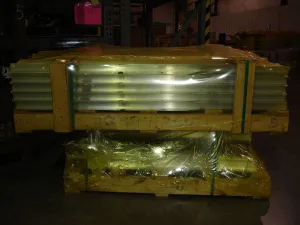
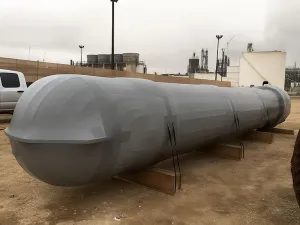
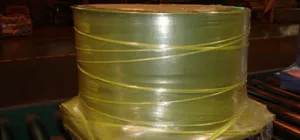
VCI shrink wrap is a heat-applied corrosion-inhibiting film designed to tightly conform around large or irregularly shaped metal equipment.
After the film is placed over the equipment, heat is applied. As a result, the material shrinks and forms a tight, secure enclosure. Once sealed, the VCI chemistry inside the film vaporizes and forms an invisible molecular layer on exposed metal surfaces, protecting against rust and corrosion.
Key Benefits of VCI Shrink Wrap
Provides a tight, sealed enclosure
Ideal for large equipment and heavy machinery
Excellent for export shipping and long-term storage
Offers strong tear and puncture resistance
Available in various thicknesses for harsh environments
Because VCI shrink wrap forms a sealed enclosure, it allows VCI molecules to saturate the internal air space more effectively, which improves protection performance.
Explore ZERUST® ICT®510-SRK Shrink VCI Film
Discover heavy-duty VCI shrink wrap engineered for long-term corrosion protection of large equipment, export shipments, and outdoor storage applications.
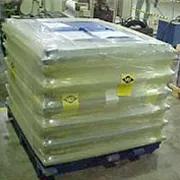
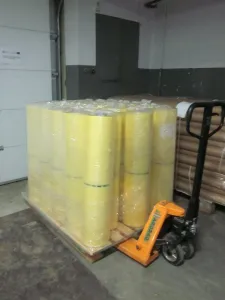
VCI stretch wrap is a stretchable corrosion-inhibiting film applied by tension rather than heat. As a result, it is commonly used for palletized loads and bundling applications.
Instead of shrinking with heat, the film stretches tightly around items to secure them for transport.
Key Benefits of VCI Stretch Wrap
Quick and easy application
No heat equipment required
Ideal for palletized shipments
Adds load stability
Good for short- to medium-term storage
However, because stretch wrap does not create a heat-sealed enclosure, it may not provide the same level of environmental sealing as VCI shrink wrap, particularly in harsh or marine environments.
Explore ZERUST® ICT®510-SM Stretch VCI Film
Learn how ZERUST® VCI stretch wrap provides reliable corrosion protection and load stability for palletized shipments, bundling applications, and short- to medium-term storage.
VCI Shrink Wrap vs. VCI Stretch Wrap: Key Differences
Feature
VCI Shrink Wrap
VCI Stretch Wrap
Application Method
Heat applied
Stretch tension
Seal Quality
Tight, sealed enclosure
Tension-wrapped, not fully sealed
Best For
Large equipment, exports, long-term storage
Pallet loads, bundling
Corrosion Protection
Higher in sealed environments
Moderate in ventilated environments
Equipment Required
Heat gun or shrink system
Manual or machine wrapper
If your application involves overseas shipping, humidity exposure, or long-term layup, VCI shrink wrap typically offers stronger corrosion protection.
When Should You Use VCI Shrink Wrap?
Choose VCI shrink wrap when:
Shipping equipment overseas
Storing machinery outdoors
Protecting valuable assets
Preparing for long-term layup
Environmental exposure is severe
Because shipping containers are not fully airtight, using properly sealed VCI shrink wrap significantly improves corrosion performance compared to loosely applied films.
When Is VCI Stretch Wrap the Better Option?
VCI stretch wrap works well when:
Shipping palletized metal parts domestically
Protection duration is shorter
You need quick, high-volume packaging
Environmental exposure is moderate
Stretch wrap is excellent for load containment, but it should not replace shrink wrap when a sealed corrosion-protective environment is required.
How VCI Technology Works in Both Films
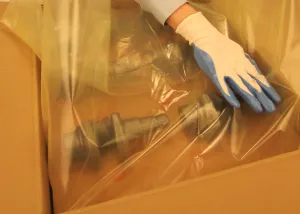
Both films contain Vapor Corrosion Inhibitor (VCI) chemistry. Once parts are enclosed:
VCI molecules vaporize into the air space.
The molecules attach to exposed metal surfaces.
A microscopic corrosion-inhibiting layer forms.
The layer protects against moisture, salt, and contaminants.
The key difference is enclosure integrity. A tighter enclosure (like with VCI shrink wrap) allows vapor concentration to stabilize more effectively.
Important Considerations Before Choosing
Before selecting your packaging:
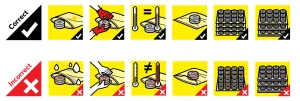
Ensure parts are clean and dry
Consider storage duration
Evaluate climate exposure
Assess shipping conditions
Determine enclosure size
The correct thickness and VCI formulation depend on your application and metal type.
Need Help Selecting the Right Product?
Choosing between VCI shrink wrap and stretch wrap depends on your environment, metal type, and storage length.
The right combination of film thickness, enclosure design, and placement can be determined with the help of your ZERUST® Account Manager. Samples and testing are available to verify the correct packaging design to protect your metal parts.
Not Sure Which VCI Film Is Right for Your Application?
Whether you need protection for long-term equipment storage or palletized shipments, our corrosion experts can help you select the right solution. Contact ZERUST® to discuss your application, request samples, or schedule testing.
Vanessa Gilbert served as Marketing Manager at ZERUST® for more than a decade, where she played a key role in shaping the company’s global brand strategy and executing integrated marketing initiatives across digital platforms, trade shows, and product marketing.
During her time at ZERUST®, Vanessa led numerous product launches and marketing campaigns that supported the growth of the company’s corrosion prevention portfolio, including Vapor Corrosion Inhibitor (VCI) packaging, rust preventative coatings, and corrosion management solutions. She worked closely with sales teams, technical experts, and international partners to ensure consistent messaging and effective market positioning across diverse industries and regions.
Vanessa was instrumental in strengthening communication with distributors and customers, helping to improve engagement, brand awareness, and overall market reach. Her efforts contributed to expanding ZERUST®’s presence in key industries such as manufacturing, transportation, and industrial supply chains, where corrosion prevention plays a critical role in protecting valuable assets and maintaining operational reliability.
With a strong understanding of both technical products and customer needs, Vanessa helped bridge the gap between product innovation and market adoption. Her work focused on delivering clear, value-driven messaging that highlighted the performance, reliability, and long-term benefits of ZERUST® solutions.
Although Vanessa has since moved on from ZERUST®, her contributions left a lasting impact on the company’s marketing strategy and global growth. Her work continues to influence how ZERUST® communicates its value and supports customers in implementing effective corrosion prevention solutions.
Explore ZERUST® Corrosion Prevention Solutions
Discover proven technologies designed to protect metal assets, improve reliability, and support long-term performance.
ICT®510-SRK Film is polyethylene shrink film impregnated with Vapor Corrosion Inhibitors that shrinks tightly around the item when subjected to heat, providing a contoured fit and VCI protection.
ICT®510-OPS VCI Shrink Film is an 8-mil, high-strength shrink film integrated with ZERUST® Vapor Corrosion Inhibitor (VCI) technology and UV stabilizers, designed specifically for the long-term outdoor preservation of large assets.
ICT®510-SM Stretch VCI Film is a high-quality cast packaging film that wraps pallet loads, bundles, large items, and irregularly shaped metal objects during storage and shipping. ideal for use with machine-stretch applications, and smaller rolls are also available for hand-stretch applications.