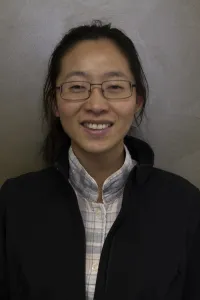
Lujie Ye
Lujie “Lulu” Ye is a Formulation Engineer and R&D Project Manager at ZERUST®, where she applies over six years of industry experience to support product development and innovation in corrosion prevention technologies.
In her role, Lulu leads and supports research initiatives focused on developing advanced corrosion protection solutions that meet the evolving needs of global manufacturers. She works closely with cross-functional teams, including engineering, technical service, and production, to design, test, and refine formulations that deliver reliable performance across a wide range of industrial environments.
Lulu’s expertise includes the development of Vapor Corrosion Inhibitor (VCI) technologies, rust preventative formulations, and water-based corrosion control solutions. Her work helps ensure that ZERUST® products provide effective protection during production, storage, and shipment while maintaining ease of use and compatibility with customer processes.
A key focus of Lulu’s work is advancing sustainable corrosion prevention technologies. She contributes to the development of formulations that reduce environmental impact while maintaining high performance, helping customers minimize material waste, improve resource efficiency, and support long-term operational sustainability.
With a strong technical background and a detail-oriented approach, Lulu plays a central role in managing R&D projects from concept through commercialization. Her ability to translate laboratory research into practical, scalable solutions ensures that ZERUST® continues to deliver innovative technologies that address real-world corrosion challenges.
Through her contributions to the ZERUST® blog, Lulu shares insights into formulation science, product innovation, and best practices that help readers better understand corrosion prevention technologies and apply effective solutions across industrial applications.
Looking for Innovative Corrosion Prevention Solutions?
Explore ZERUST® technologies developed through advanced research and formulation expertise to protect your metal assets.
Articles by Lujie Ye