When evaluating the integrity and safety of pressurized systems, two widely used methods are pneumatic and hydrostatic pressure testing. For industries that rely on pressure vessels, heat exchangers, fire protection systems, and other critical equipment, maintaining asset integrity during hydrostatic testing is essential. Selecting the right method can ensure safety, accuracy, and cost-efficiency. This blog will focus on the benefits and challenges of each testing method, emphasizing the role of hydrostatic testing in maintaining pressure vessel performance and longevity.
What is Hydrostatic Pressure Testing?
Hydrostatic pressure testing, or hydrotesting, is a method of testing pressure vessels for leaks and structural integrity. It involves filling the system with water or another liquid and pressuring it to levels exceeding normal operating conditions. Hydrostatic testing ensures they can withstand operational pressures and detect potential weak points before they become hazards.
Advantages:
Realistic Simulation: Most pressure vessels carry liquids. As a result, hydrostatic testing closely mimics real-world conditions. This ensures that the system will perform reliably during actual operation.
Safety: Water, as a testing medium, poses no risk of explosion or fire, making hydrostatic tests safer than pneumatic alternatives.
Accurate Leak Detection: Water’s incompressible nature allows precise identification of leaks, even minor ones, which is crucial for pressure vessel integrity.
Environmental Friendliness:Hydrostatic testing uses water, which is non-hazardous and eco-friendly, compared to gases used in pneumatic testing.
Uniform Pressure Distribution: The even distribution of hydrostatic pressure identifies weak points, helping to prevent future pressure vessel failures.
Challenges:
While effective, hydrostatic testing does have some challenges, particularly regarding corrosion, draining, and disposal:
Corrosion Concerns: The water used in hydrostatic pressure tests can lead to internal corrosion in the pressure vessel if contaminants are present. This is where ZERUST® products play a pivotal role:
ZERUST® AxxaVis™ HST-10: A water-soluble hydrostatic testing corrosion inhibitor that neutralizes contaminants in hydrostatic pressure testing water. As a result, it provides protection against rust and prevents deposits on pressure vessel interiors.
ZERUST® AxxaTec™ HST-M100: A hydrotesting fluid additive that enhances water’s protective properties. As a result, it reduces the risk of internal corrosion during and after testing.
ZERUST® AxxaTec™ HST-20L: A water treatment concentrate that improves water quality for hydrostatic testing. This ensures temporary protection and prevents flash rust after draining.
Draining and Disposal: Properly draining and disposing of hydrostatic pressure testing water can be labor-intensive. Using ZERUST® additives allows the water to be environmentally safe, and it can even be reused for other purposes, such as dust control or landscaping, making the process sustainable and cost-effective.
Protect Pressure Vessels During Testing
Hydrostatic testing can expose pressure vessels to corrosion caused by water contaminants and dissolved oxygen. Discover how ZERUST® hydrostatic testing solutions help prevent rust and protect critical infrastructure during and after testing.
Pneumatic pressure testing involves pressurizing a system with compressed gases like nitrogen or helium. While commonly used in certain industries, it has limitations when compared to hydrostatic testing.
Advantages:
Faster pressurization and depressurization.
No risk of introducing moisture, making it suitable for systems that cannot tolerate water.
Challenges:
Safety Risks: Compressed gases can be hazardous, posing risks of explosion or fire in the event of a leak.
Cost and Complexity: Using gases like helium or nitrogen involves significant logistical challenges and higher costs than hydrostatic pressure tests.
Limited Leak Detection: Gas testing may not provide the same level of accuracy as water-based hydrostatic testing, particularly for detecting small leaks.
Learn More About Hydrostatic Pressure Testing for Pressure Vessels
While pneumatic testing can be useful in certain applications, many operators rely on hydrostatic pressure testing to safely verify system integrity and detect leaks. Explore how hydrostatic testing works and how corrosion protection solutions can help protect pressure vessels during the testing process.
Why Hydrostatic Pressure Testing is Ideal for Pressure Vessels
For pressure vessel projects, the advantages of hydrostatic testing far outweigh those of pneumatic methods. Key benefits include:
Cost Savings: Hydrostatic pressure testing with ZERUST® additives reduces costs by avoiding the need for expensive gases, specialized equipment, and high logistical demands.
Safety: Water eliminates the risk of explosion, making hydrostatic pressure testing the safer option for pressure vessels in populated or sensitive areas.
Environmental Impact: With ZERUST® HST-10 and similar products, hydrostatic testing water can be treated and reused, ensuring compliance with environmental standards.
Long-Term Corrosion Protection: ZERUST® additives ensure pressure vessels are tested and protected from corrosion during and after the process, extending their service life.
Both pneumatic and hydrostatic tests are valuable for ensuring the safety and reliability of pressurized systems. However, for pressure vessels, hydrostatic testing stands out as the superior choice, offering safety, accuracy, and cost-efficiency. Incorporating ZERUST® corrosion inhibitors like AxxaVis™ HST-10, AxxaTec™ HST-M100, and AxxaTec™ HST-20L further enhances the benefits by mitigating corrosion risks and promoting sustainability.
When considering your next hydrostatic pressure test, remember that the right tools and additives ensure compliance and preserve your investments for years to come!
Need Help with Corrosion Protection?
ZERUST® corrosion experts can help you select the right additives and protection strategy for your applications. Contact our team to discuss your pressure vessel testing challenges and find the best corrosion prevention solution.
Tom White is the Marketing Manager at ZERUST®, bringing nearly a decade of experience in Vapor Corrosion Inhibitor (VCI) technologies and corrosion prevention solutions. He holds a degree in marketing from St. Cloud State University and specializes in translating complex technical solutions into clear, effective messaging that resonates with industrial audiences.
In his role, Tom leads strategic marketing initiatives that promote ZERUST®’s global product portfolio, including sustainable VCI packaging films, rust preventative coatings, and industrial cleaning solutions. He works closely with technical teams, sales leaders, and international partners to ensure that product positioning aligns with real-world applications and customer needs across industries such as manufacturing, transportation, and infrastructure.
Tom is actively involved in product launches, trade show planning, digital marketing strategy, and content development. His work focuses on connecting ZERUST®’s corrosion prevention technologies with engineers, manufacturers, and decision-makers who rely on effective asset protection and operational reliability.
With a strong emphasis on customer engagement and market insight, Tom helps bridge the gap between technical expertise and business impact. He supports initiatives that highlight how corrosion prevention improves equipment lifespan, reduces downtime, and contributes to more sustainable operations.
Through his contributions to the ZERUST® blog, Tom shares insights on corrosion prevention strategies, industry trends, and product applications. His content is designed to educate and inform while helping organizations identify the right solutions to protect valuable metal assets and optimize long-term performance.
Discover Proven Corrosion Prevention Solutions
Explore ZERUST® technologies designed to protect your metal assets, improve reliability, and support long-term performance.
AxxaVis™ HST-10 powder additive is an effective hydrostatic testing corrosion inhibitor that treats water used to test pressure vessels and voids. It reduces hardness and deactivates ionic contaminants like chlorides found in municipal water sources, preventing rust and hard water deposits on metals.
Axxatec™ HST-20L is a highly effective water treatment concentrate designed to deactivate ionic contaminants found in water sources that cause rust and hard water deposits on metals during hydrostatic testing.
Axxatec™ HST-M100 is a low to no-foam, water-soluble hydrotesting fluid additive designed for corrosion protection in hydrostatic testing. Ideal for use with aluminum, copper, brass, and ferrous metals.

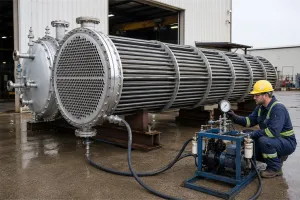
 Pneumatic pressure testing involves pressurizing a system with compressed gases like nitrogen or helium. While commonly used in certain industries, it has limitations when compared to hydrostatic testing.